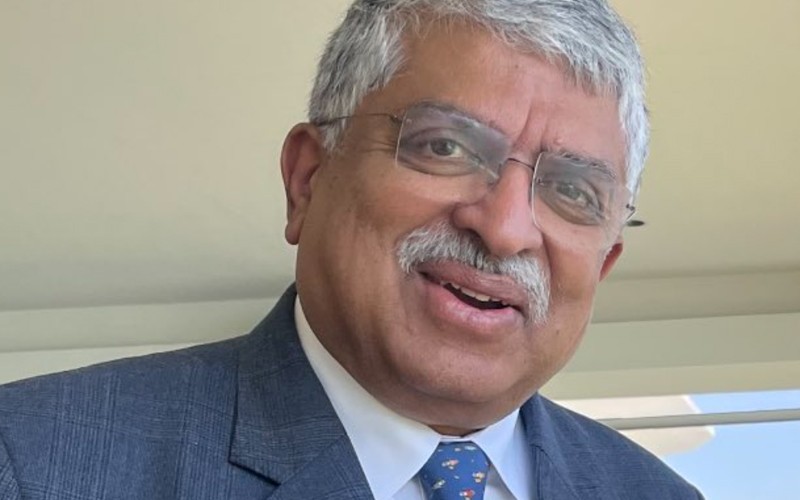
Aadhaar architect Nandan Nilekani says energy sector poised to become India's next UPI
Bengaluru: Drawing a parallel to the Unified Payments Interface (UPI), which has transformed digital transactions, Infosys co-founder Nandan Nilekani predicted that India’s energy sector will create millions of micro-entrepreneurs, media reports said.
"The next UPI is energy," said Nilekani, the architect of Aadhaar, as he envisioned a radical shift in how energy is produced, consumed, and traded at the household level.
Decentralised energy production as the future
Speaking at the Arkam Annual Meet’s The Great Unlock: India in 2035 event, Nilekani highlighted his vision for decentralised energy systems.
"Every home will be an energy producer because they have rooftop solar. Every home will be an energy store because they have an EV battery. So, every home is a producer of energy, seller of energy, and buyer of energy. So, like UPI, you will now be able to buy and sell energy," he explained.
Energy is the next UPI! Millions of small producers will participate in the Digital Energy Grid (DEG).
— Nandan Nilekani (@NandanNilekani) March 28, 2025
Full video: https://t.co/NboKoiSIXh pic.twitter.com/o2MbSquesQ
He emphasised that this shift could redefine energy consumption in India, empowering individuals to actively participate in the energy economy.
Micro-energy entrepreneurs to drive growth
Highlighting the impact of this transformation, Nilekani suggested that decentralised energy solutions could unlock vast entrepreneurial potential. "It is going to be a huge thing (energy) which will create its own set of energy entrepreneurs," he remarked, drawing comparisons with UPI’s widespread adoption and ease of use.
A shift in how energy is perceived
Nilekani also pointed out how the current approach to energy consumption could evolve.
"We're used to buying and storing energy in small amounts. When you are buying an LPG cylinder, you're buying packetised energy. But electricity, we always thought of as something coming from the grid," he said, underlining the shift towards decentralised energy solutions.
UPI's success and India's digital future
Nilekani’s observations carry weight given UPI’s remarkable success. Handling over 80% of India’s digital transactions, the platform has expanded to international markets such as the UAE and France.
In January alone, UPI transactions exceeded 16.99 billion, amounting to more than ₹23.48 lakh crore.
Its seamless integration with banks and fintech platforms has been a key factor in its widespread adoption.
Four pillars of India's development
Addressing the broader landscape of India’s growth, Nilekani identified four critical areas—technology, capital, entrepreneurship, and formalisation—as fundamental to the nation’s progress.
1 million Indian start-ups by 2035! It's happening due to binary fission and an explosion of new businesses in Bharat. More here👇 pic.twitter.com/kAKp86UuR1
— Nandan Nilekani (@NandanNilekani) March 24, 2025
He projected that India's startup ecosystem, currently home to about 150,000 startups, could expand to one million by 2035.
Support Our Journalism
We cannot do without you.. your contribution supports unbiased journalism
IBNS is not driven by any ism- not wokeism, not racism, not skewed secularism, not hyper right-wing or left liberal ideals, nor by any hardline religious beliefs or hyper nationalism. We want to serve you good old objective news, as they are. We do not judge or preach. We let people decide for themselves. We only try to present factual and well-sourced news.
Support objective journalism for a small contribution.