India must do more to boost manufacturing and job creation: Raghuram Rajan
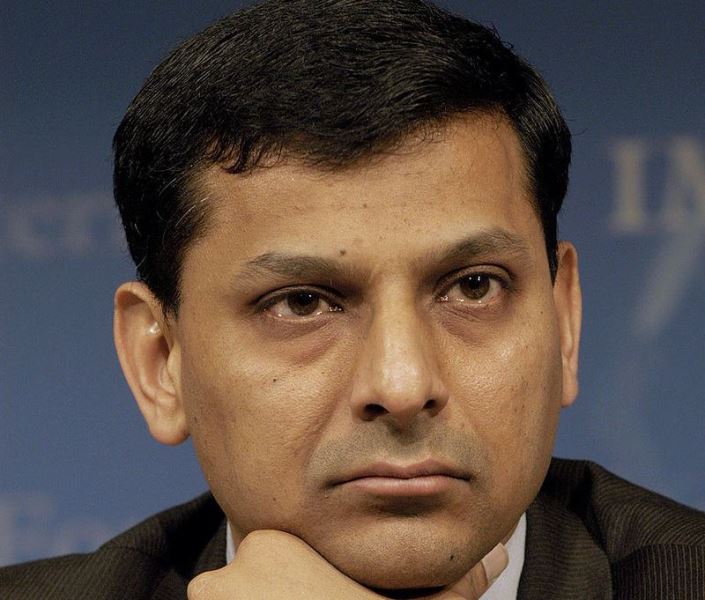
Mumbai: India has made significant progress in infrastructure over the past decade, but more needs to be done in other sectors to enhance local manufacturing and job creation, former RBI Governor Raghuram Rajan said on Thursday.
In an interview with PTI, Rajan emphasised the importance of the government's focus on production, whether it involves goods or services, but stressed that it must be done correctly.
Commenting on the Modi government's 'Make in India' initiative, he stated, "I would say the intention is good. I think in some areas, we have done a lot, as I said, in infrastructure...we have done a lot that has been very useful."
The 'Make in India' campaign, launched on September 25, 2014, aimed to boost local manufacturing and exports.
Rajan, however, highlighted the need to evaluate the initiative's impact in other areas.
"But we need to check the other places. And the best way to check is to ask critics, what do you think? What has happened? Has it happened the way you want it? Should we do more? You get feedback, and then you work along," he suggested.
Rajan also advocated for improving the ease of doing business, particularly by addressing government policies and reducing the fear of raids by inspectors or tax authorities. "If we focus on that, I think that would strengthen the concept of Make in India," he said.
A professor of finance at Chicago Booth, Rajan urged the government to seek input from business leaders about the challenges they face, rather than solely relying on the World Bank's ease of doing business checklist.
He also cautioned against dismissing criticism of government policies as being driven by vested interests or hidden agendas.
Under the 'Make in India' initiative, the government has implemented several measures to support local manufacturing and exports, including production-linked incentive (PLI) schemes for 14 sectors, easing foreign direct investment (FDI) norms, reducing compliance burdens, a single window approval system, and the national logistics policy.
When asked if 7 percent economic growth is sufficient for India to become the world's third-largest economy and a developed nation by 2047, Rajan responded, "If we grow at 7 percent, then we will be past Germany and Japan in 2-3 years. That is not something which is out of the realm of possibility, it will happen."
He noted, however, that India's GDP currently stands at USD 3.7 trillion, compared to Germany's USD 4.5 trillion and Japan's USD 4.2 trillion.
Rajan also raised concerns about the definition of a "developed nation," stating, "What is more worrisome, however, is when we say a developed nation. Now, what does it mean to be developed now? That is also a changing metric."
Support Our Journalism
We cannot do without you.. your contribution supports unbiased journalism
IBNS is not driven by any ism- not wokeism, not racism, not skewed secularism, not hyper right-wing or left liberal ideals, nor by any hardline religious beliefs or hyper nationalism. We want to serve you good old objective news, as they are. We do not judge or preach. We let people decide for themselves. We only try to present factual and well-sourced news.
Support objective journalism for a small contribution.