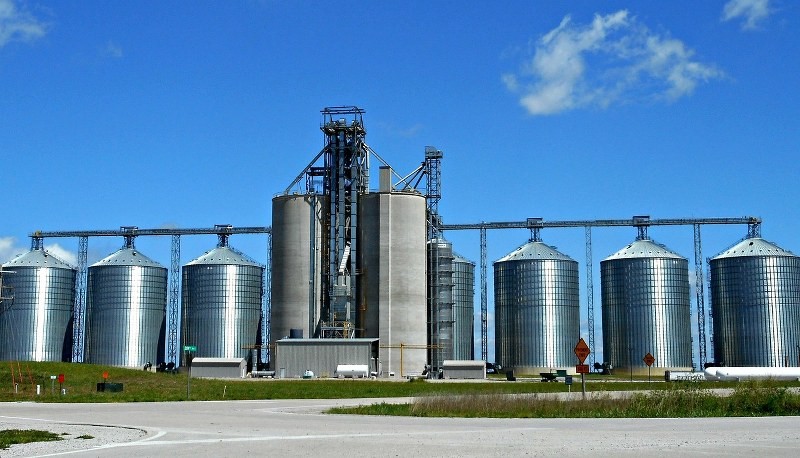
India to expand wheat silo capacity to 9 million tonnes by 2027
New Delhi: The Indian government plans to expand its wheat silo capacity to 9 million tonnes (MT) within the next three years, up from the current 2.8 MT of advanced grain storage facilities, as per a report by The Financial Express.
The Food Corporation of India (FCI) has issued tenders for building 2.5 MT of modern wheat silos through a public-private partnership (PPP) model. By February 2025, contracts for these state-of-the-art facilities are expected to be awarded, according to the report.
Presently, 35 silos with a cumulative capacity of 2.8 MT are operational.
Additionally, contracts for over 3.5 MT of storage capacity at 80 locations have been granted to private firms, with completion anticipated within two years, the report said.
“In a couple of years, the total wheat silo capacity is expected to reach close to 9 MT,” an official was quoted as saying by FE.
The initiative is part of a Rs 9,000 crore project to create 9 MT of silo capacity for wheat storage across 250 locations in states including Punjab, Haryana, Madhya Pradesh, Uttar Pradesh, Rajasthan, Gujarat, and others.
FCI will lease these silos from private entities for 30 years, paying fixed storage fees on a per-tonne, per-year basis.
Contracts have been awarded to private players such as Adani Agri Logistics, KCC Infrastructure, and Om Metals Infra Projects.
The construction employs two models: the Design-Build-Fund-Own-Transfer (DBFOT) mode, where FCI owns the land, and the Design-Build-Fund-Own-Operate (DBFOO) model, where private entities own the land.
The cost of constructing 1 MT of silo capacity is estimated at Rs 1,000 crore, said the report, adding that these silos, designated as sub-mandi yards, aim to streamline grain procurement for farmers and significantly lower logistical costs.
On a pilot basis, a 12,500-tonne steel silo for rice storage has been built in Buxar, Bihar, and will be operational next month, the FE report said.
Unlike wheat, rice storage requires maintaining a temperature of 15°C, and the technology for this is under development.
The FCI annually stores 40-50 MT of rice and wheat for distribution under the National Food Security Act.
Silos enhance grain preservation and minimise wastage.
Following recommendations from a 2015 high-level committee chaired by former food minister Shanta Kumar, the construction of silos with railway sidings began, adopting a ‘hub-and-spoke’ model due to land acquisition challenges.
Support Our Journalism
We cannot do without you.. your contribution supports unbiased journalism
IBNS is not driven by any ism- not wokeism, not racism, not skewed secularism, not hyper right-wing or left liberal ideals, nor by any hardline religious beliefs or hyper nationalism. We want to serve you good old objective news, as they are. We do not judge or preach. We let people decide for themselves. We only try to present factual and well-sourced news.
Support objective journalism for a small contribution.