

 Kashmir Economy
Jammu and Kashmir: Pulwama is fast emerging as the new Anand
Shopian: Jammu and Kashmir's Pulwama district is slowly moving away from its dark days of terrorism to create a new history in milk production in the country, emerging as the new Anand of the region.
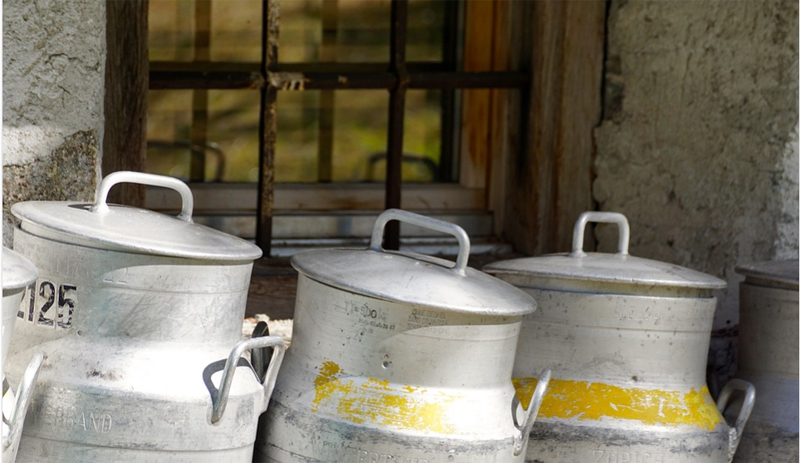
As a part of the new era in employment generation in the belt, 40 milk collection centres are currently present in the region, besides there are vendors and their middlemen who procure milk from every village house for milk plants in Pulwama district.
Last year, official figures show Pulwama produced 31 crore litres of milk, which was supplied across J&K, and in 2017-18, it produced 28.04 crore litres. Every day, 8.5 lakh litres of milk is produced in Pulwama, reports Hindustan Times.
The abundance in supply has motivated entrepreneurs in setting up processing units and the district.
The region now has five big milk plants. They have come up in past 12 years.
“My unit has a capacity to process 50,000 litres of milk and the venture is running in profit. There is no shortage of milk here. We market and process more than 20,000 litres of milk and milk products every day,” Shabir Ahmad, the owner of one of the units in Pulwama, told Hindustan Times.
“We get all our milk from local villages and our collection vans go everywhere in the district. Earlier, we used to collect milk from house to house, however, the network ended after the 2016 agitation when the Valley remained shut for six months. Now, we have suppliers who bring milk from households across the district,” he says.
Sharing the secret behind Pulwama’s dairy revolution, district chief animal husbandry officer Syed Abas told the newspaper, “The topography of the district is such that it is full of orchards and has vast swathes where fodder is grown. Almost every house has milch cattle. Many educated youngsters have also set up small dairy farms.”
Drawing inspiration from Pulwama, now neighbouring Shopian district is also taking interest in milk production.
“Most rural families here were into horticulture but they have now shifted to rearing cows and collectively produce three lakh litres of milk a day,”Muneer Ahmad Quershi, the chief animal husbandry officer of Shopian, told Hindustan Times.
“For women, the milk produced by cows generates enough to run their homes and gives them financial independence,” he says.
Support Our Journalism
We cannot do without you.. your contribution supports unbiased journalism
IBNS is not driven by any ism- not wokeism, not racism, not skewed secularism, not hyper right-wing or left liberal ideals, nor by any hardline religious beliefs or hyper nationalism. We want to serve you good old objective news, as they are. We do not judge or preach. We let people decide for themselves. We only try to present factual and well-sourced news.
Support objective journalism for a small contribution.