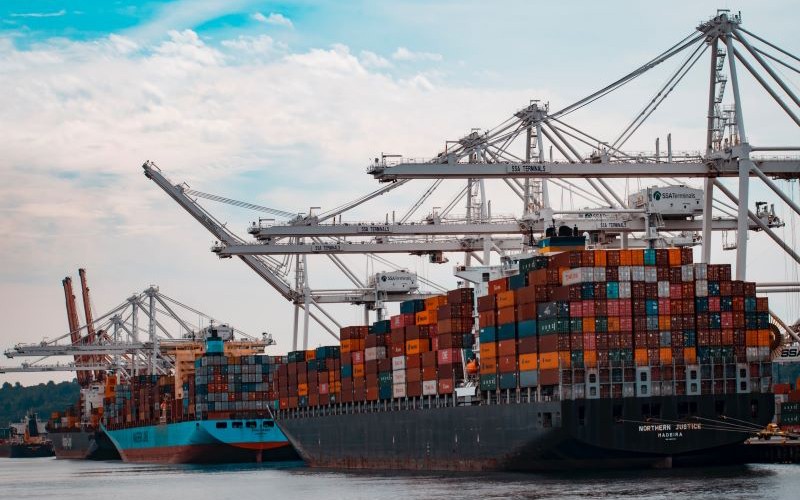
Pakistani importers hit by cargo delays, higher freight costs as India continues to shut ports for Islamabad
New Delhi/Islamabad: India’s decision to ban ships carrying goods originating in or exported from Pakistan has triggered a surge in freight charges and longer delivery timelines for Pakistani importers, Dawn reported, citing industry insiders.
The sweeping restriction, which came into effect on May 2, 2025, in the wake of the Pahalgam terror attack, bars both direct and indirect movement of Pakistani cargo through Indian ports.
The move has disrupted maritime logistics and prompted stricter enforcement by Indian authorities. “Mother vessels are not coming to Pakistan due to this Indian action, which delays our imports by 30 to 50 days,” said Javed Bilwani, president of the Karachi Chamber of Commerce and Industry, as quoted by Dawn.
He noted that importers are now dependent on feeder vessels, which has significantly pushed up transport costs.
Exporters echoed the concern over rising logistical expenses, particularly for insurance. “There is no significant impact on exports, except for a rise in insurance costs. Shipping charges had already gone up even before the escalation,” textile exporter Aamir Aziz told the newspaper.
Pakistan’s export sector, which relies heavily on imported raw materials for value-added production, now faces added hurdles.
With Islamabad already curbing non-essential imports to protect its foreign exchange reserves, the disruption has broad economic implications.
India’s enforcement efforts have been aggressive.
One such initiative, ‘Operation Deep Manifest’ by the Directorate of Revenue Intelligence (DRI), has targeted illegal imports of Pakistani goods routed through third countries such as the UAE.
Under the operation, authorities have seized 39 containers carrying over 1,100 metric tonnes of cargo, valued at ₹9 crore.
These shipments were falsely declared as UAE-origin but were later found to have been transshipped from Pakistan via Dubai.
According to the finance ministry, investigators uncovered financial trails linking Indian importers to Pakistani entities and arrested a partner from a trading firm involved in the case.
The operation exposed a sophisticated network of intermediaries in Pakistan and the UAE designed to mask the true origin of goods.
The crackdown forms part of India’s broader security response, including initiatives like ‘Operation Sindoor’ that aim to strengthen oversight on cross-border trade in light of persistent regional threats.
India had previously raised tariffs on Pakistani imports to 200% following the 2019 Pulwama terror attack, effectively halting formal trade ties.
Bilateral trade plummeted from $2.41 billion in 2018 to $1.2 billion in 2024, while Pakistan’s exports to India plunged from $547.5 million in 2019 to just $480,000 in 2024, according to PTI.
The Indian government maintains that the trade restrictions are essential for national and economic security, as well as to prevent the misuse of trade routes.
Support Our Journalism
We cannot do without you.. your contribution supports unbiased journalism
IBNS is not driven by any ism- not wokeism, not racism, not skewed secularism, not hyper right-wing or left liberal ideals, nor by any hardline religious beliefs or hyper nationalism. We want to serve you good old objective news, as they are. We do not judge or preach. We let people decide for themselves. We only try to present factual and well-sourced news.
Support objective journalism for a small contribution.