

RBI imposes restrictions on deposit of old notes until Dec 30
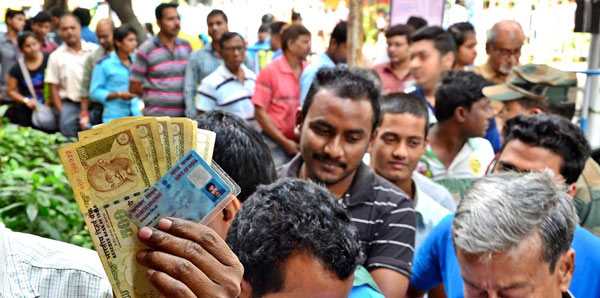
Defunct notes over Rs 5,000 can now be deposited only once per account till Dec 30 after showing reasons for not doing so earlier, according to the RBI circular.
The RBI in its circular dated Dec 19 said that following review of certain provisions dealing with credit of the value of Specified Bank Notes (SBNs) into bank accounts, it has been decided to place certain restrictions on deposits of SBNs into bank accounts while encouraging the deposits of the same under the Taxation and Investment Regime for the Pradhan Mantri Garib Kalyan Yojana, 2016.
According to the RBI circular, "Tenders of SBNs in excess of rupees 5000 into a bank account will be received for credit only once during the remaining period till December 30, 2016. The credit in such cases shall be afforded only after questioning tenderer, on record, in the presence of at least two officials of the bank, as to why this could not be deposited earlier and receiving a satisfactory explanation. The explanation should be kept on record to facilitate an audit trail at a later stage. An appropriate flag also should be raised in CBS to that effect so that no more tenders are allowed.
Although, the RBI has said that tenders of SBNs up to rupees 5000 in value received across the counter will allowed to be credited to bank accounts in the normal course until December 30, 2016, but even when tenders smaller than rupees 5000 are made in an account and such tenders taken together on cumulative basis exceed rupees 5000,, they may be subject to the procedure to be followed in case of tenders exceeding rupees 5000, with no more tenders being allowed thereafter until December 30, 2016.
The RBI has said that it may also be ensured that full value of tenders of SBNs in excess of rupees 5000 shall be credited to only KYC compliant accounts and if the accounts are not KYC compliant, credits may be restricted up to rupees 50,000 subject to the conditions governing the conduct of such accounts.
According to the RBI, the above restrictions shall not apply to tenders of SBNs for the purpose of deposits under the Taxation and Investment Regime for the Pradhan Mantri Garib Kalyan Yojana, 2016.
Support Our Journalism
We cannot do without you.. your contribution supports unbiased journalism
IBNS is not driven by any ism- not wokeism, not racism, not skewed secularism, not hyper right-wing or left liberal ideals, nor by any hardline religious beliefs or hyper nationalism. We want to serve you good old objective news, as they are. We do not judge or preach. We let people decide for themselves. We only try to present factual and well-sourced news.
Support objective journalism for a small contribution.