Renault calls union budget a constructive one
At a broad level, he said, Union Budget 2016 is constructive and will be instrumental in laying the foundations for long-term sustainable growth. The 9 pillars on which the budget is based on addresses measures for growth, while keeping the fiscal deficit within the set limit of 3.5% and curbing inflation for FY 2016-17.
"The Union Budget 2016 rightly focusses on the core issues which needed attention, including agriculture, social programmes, rural development, education with skill development, infrastructure, financial reforms, policy reforms in terms of ease of doing business, fiscal discipline and tax reforms. Fundamentally all these measures will go a long way in stimulating the domestic demand, which clearly is the need of the hour, especially in wake of the prevailing global uncertainties," Sawhney said.
"As was much desired, the budget has rightly focused on positive measures to give impetus to infrastructure growth. Although we will have to study the fine print of the budget in terms of clear programs to boost investment, manufacturing and skill development, the directional focus is in sync with the overall expectations to boost growth. This budget will go a long way in further bolstering India’s position in the global economy," he said.
He said the budget also reflects Government’s focus on ‘Make in India’, as it announced measures to enhance domestic competitiveness in sectors including Defence, IT, Textiles, et al.
According to Sawhney, the budget clearly focusses on a long-term vision, aimed at high growth, together with emphasis on the fiscal deficit, and keeping big bang investments in check. But, policies for the automobile sector remained largely unchanged.
Citing pollution and the traffic situation in cities as a matter of concern, he said, "There is a proposal to levy a cess of 1% on small, petrol and CNG cars, 2.5% on diesel cars of certain capacity and 4% on other higher engine capacity vehicles and SUVs."
"While doing this, the industry was hoping that the Government should have taken progressive steps such as introducing a ‘scrappage incentive scheme’, to keep older cars off the roads and would not have impacted the industry. Such a policy will benefit the environment, reduce fuel consumption and also propel further demand for greener and efficient vehicles," he said.
The industry was also hoping for excise duty reduction to be reintroduced and a roadmap on GST implementation, as a unified excise and taxation structure will go a long way to benefit the industry.
"Although the budget didn’t have much for the automobile sector, we are hopeful for some pro-business policies on a continual basis to benefit the industry. A positive to the auto sector is the investments and reforms in agriculture and infrastructure sectors, which will have a rub-off effect on the core sectors that drive the economy," said he.
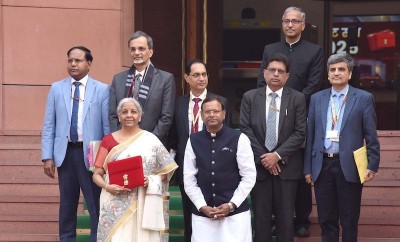
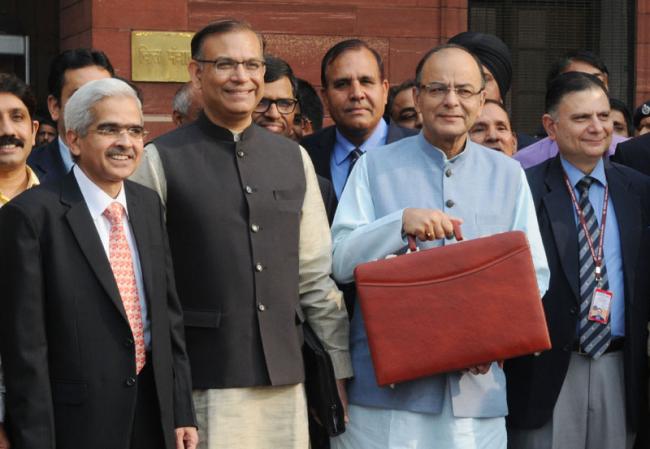
Union Finance Minister Arun Jaitley on Monday presented the Union Budget 2016 focusing on rural development and farm and social sector along with infrastructure with analysts terming it a pro-poor, pro-agriculture move that throws a challenge to the government to implement in reality.
Support Our Journalism
We cannot do without you.. your contribution supports unbiased journalism
IBNS is not driven by any ism- not wokeism, not racism, not skewed secularism, not hyper right-wing or left liberal ideals, nor by any hardline religious beliefs or hyper nationalism. We want to serve you good old objective news, as they are. We do not judge or preach. We let people decide for themselves. We only try to present factual and well-sourced news.
Support objective journalism for a small contribution.