

 Poor Countries
Revealed: The cost of the pandemic on world's poorest countries
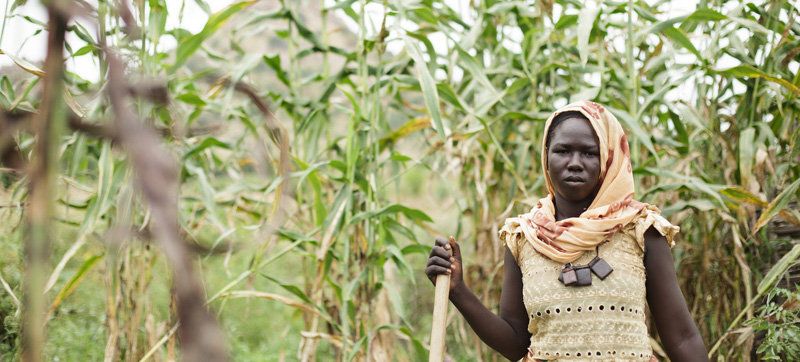
New York: More than 32 million of the world’s poorest people face being pulled back into extreme poverty because of COVID-19, leading UN economists said on Thursday, highlighting data showing that the pandemic is likely to cause the worst economic crisis in decades among least developed countries (LDCs).
In a call for urgent investment and support from the wider international community, the UN trade and development agency, UNCTAD, warned that the new coronavirus risked reversing years of “painstaking progress” in poverty reduction, nutrition and education.
“The COVID crisis is leading LDCs to their worst economic crisis in 30 years, with per capita GDP (Gross Domestic Product) for the group expected to fall by 2.6 per cent this year ,” said Mukhisa Kituyi, UNCTAD Secretary-General, during a virtual press conference.
“We project that absolute poverty indices will be expand by 32 million, and extreme poverty rates in these countries will rise from 32.5 per cent to 35.7 in the current year.”
An estimated 1.06 billion people live in the 47 LDCs, which account for less than 1.3 per cent of global economic turnover, orGDP.
Extreme poverty is defined as having an income lower than $1.90 per day.
In 2019, average earnings per capita in these countries – which are mainly in Africa - was $1,088 compared with the world average of $11,371, the UN agency said, highlighting their weak infrastructure and reduced financial means to withstand economic shocks.
Disastrous fallout
The potentially disastrous fallout from the new coronavirus pandemic could be reversed with urgent investment and support from the international community to help overcome LDCs’ vulnerabilities and improve their manufacturing capacity, Mr. Kituyi insisted.
Turning to concerns about how COVID-19 threatens to push back moves to implement much-needed transformative economic changes in line with the Sustainable Development Goals (SDGs), the UNCTAD chief said that those which had invested most in boosting production capacity were the ones that were likely to weather the global downturn.
“The LDCs that have been most active and innovative in combating the pandemic have been those with the most productive capacity or institutional capacity,” Mr. Kituyi said. “Countries like Senegal, which produced cheap and rapid COVID testing kits, Bangladesh and others like Ethiopia, repurposing garment factories to produce PPEs (personal protective equipment).”
The development of productive capacity had been “too small” in most LDCs which have now “fallen behind” other developing countries, Mr Kituyi explained.
“Structural transformation in the LDCs has been restricted to just a handful of countries like Bangladesh, Ethiopia, Cambodia, Laos, Myanmar, Nepal and Rwanda. Only in these small handful of LDCs have we experienced sufficient industrial growth and an expansion of modern services sectors, leading to stronger labour productivity gains.”
By contrast, most African LDCs and Haiti have seen much smaller structural change, where agriculture and other traditional activities were likely to see continuing low levels of economic growth and lead to little improvement in people’s living standards.
The report, which assesses the economic potential and capacity of least developed countries, also highlights what key measures will help them recover better after the pandemic.
As an example of sustainable industrial change, it cited Uganda’s Kayoola Bus initiative, which has established the domestic production of buses powered mainly by renewable energy, to tackle the environmental and health problems of transport-related air pollution.
Support Our Journalism
We cannot do without you.. your contribution supports unbiased journalism
IBNS is not driven by any ism- not wokeism, not racism, not skewed secularism, not hyper right-wing or left liberal ideals, nor by any hardline religious beliefs or hyper nationalism. We want to serve you good old objective news, as they are. We do not judge or preach. We let people decide for themselves. We only try to present factual and well-sourced news.
Support objective journalism for a small contribution.