August 15, 2026 04:37 am (IST)

Follow us:


UN reports solid return on national investments in quality jobs
New York, May 28 (IBNS): Developing countries that invested in quality jobs from the early 2000s grew nearly one percentage point faster every year since 2007 and were better able to weather the economic crisis than comparable economies, according to a new report by the United Nations labour agency.
The annual report of the International Labour Organization (ILO), The World of Work 2014, focuses this year on the relationship between good jobs and national development through analysis of 140 developing and emerging nations.
“Decent work opportunities for women and men help trigger development and reduce poverty,” Guy Ryder, Director-General of the ILO,” said in a news release on the launch of the report, subtitled Developing with Jobs.
“Development doesn’t happen through such things as exports, open trade and foreign direct investment on their own,” Ryder said.
“Social protection, respect for core labour standards and policies that promote formal employment are also crucial for creating quality jobs that raise living standards, increase domestic consumption and drive overall growth,” he added.
The report cites Senegal, where wage and salaried workers increased from around 12 per cent in 1991 to 26 per cent in 2013, as a case in point, showing that productivity increased there by an average of 0.5 per cent per year.
In Peru, it says, wage and salaried workers increased by an estimated 15 percentage points, and productivity grew by an average of 1.8 per cent per year. In both countries, inequality was also reduced as the percentage of working poor declined, it says.
“In view of the evidence, it is essential to make decent work a central goal in the post-2015 development agenda,” stressed Raymond Torres, Director of the ILO Research Department.
“Over the next decade, developing countries will need to create around 40 million new jobs every year in order to keep up with the growing working age population,” he said.
The report, which also covers global unemployment figures, social protection measures and economic migration flows, shows a smaller increase in unemployment than previous projections, with some 200 million out of work in 2013, predicted to rise by 3.2 million through 2014.
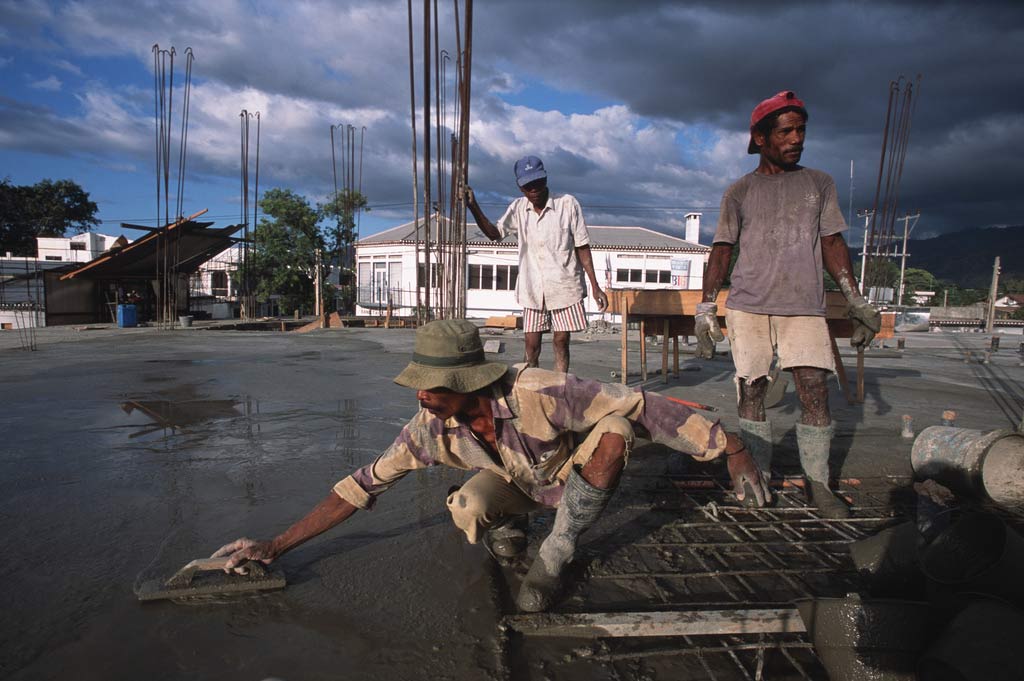
(Men at work pouring cement on a rooftop. Photo: World Bank/Alex Baluyut)
Support Our Journalism
We cannot do without you.. your contribution supports unbiased journalism
IBNS is not driven by any ism- not wokeism, not racism, not skewed secularism, not hyper right-wing or left liberal ideals, nor by any hardline religious beliefs or hyper nationalism. We want to serve you good old objective news, as they are. We do not judge or preach. We let people decide for themselves. We only try to present factual and well-sourced news.
Support objective journalism for a small contribution.



Latest Headlines
HCG Q1 results: Cancer care major posts 190% jump in adjusted profit, revenue rises 13%
Fri, Aug 14 2026
Big relief for Zee Entertainment: SAT allows warrants issue, dividend access despite SEBI ban
Fri, Aug 14 2026
Olectra Greentech Q1 shocker: Revenue soars 66%, profit barely moves; shares crash 4%
Fri, Aug 14 2026
Red Friday on Dalal Street: Sensex plunges 300 points, Nifty slides amid geopolitical tensions
Fri, Aug 14 2026
Tata Motors shares jump 6% after Q1 profit soars 83% to ₹2,560 crore
Thu, Aug 13 2026
RVNL posts strong Q1 numbers, but shares fall sharply
Thu, Aug 13 2026
Profit soars 39%, but Grasim stock crashes 3% after Q1 results
Thu, Aug 13 2026
Sensex plunges 170 points, Nifty nears 24,350 as market takes a hit
Thu, Aug 13 2026