US sanctions bill threatens 500% tariffs on India over Russian oil imports
New Delhi/Washington DC: The United States is threatening India with what one senator has called an “economic bunker-buster”—a dramatic tariff strike if New Delhi continues to buy Russian oil, according to an Economic Times.
India faces the prospect of crippling 500% tariffs on all its exports to the US under a new bipartisan sanctions bill gaining traction in Washington.
The Sanctioning Russia Act of 2025, introduced in April by Senators Lindsey Graham (Republican) and Richard Blumenthal (Democrat), seeks sweeping economic action not just against Russia, but also against any country continuing to import Russian energy.
The legislation proposes an unprecedented penalty: a 500% tariff on all US imports from nations that purchase Russian oil, gas, petrochemicals, or uranium.
Its stated aim is to cripple Russia’s primary revenue stream—energy exports—and pressure Moscow into serious negotiations to end the war in Ukraine. India and China, two of Russia’s top energy clients, are in the crosshairs.
A high-stakes economic warning
“This is an economic bunker-buster,” Graham declared, underscoring the intent to strike at the financial engine of Russia’s war effort by targeting its biggest energy customers.
The logic behind the bill, according to its sponsors, is that existing sanctions and diplomatic pressure have failed to halt the conflict in Ukraine.
Moscow’s ability to keep funding the war stems from energy exports that continue unimpeded—especially to nations unwilling to join Western sanctions.
Trump administration resists hard enforcement
While the bill is gaining momentum on Capitol Hill, the Trump administration is pushing back.
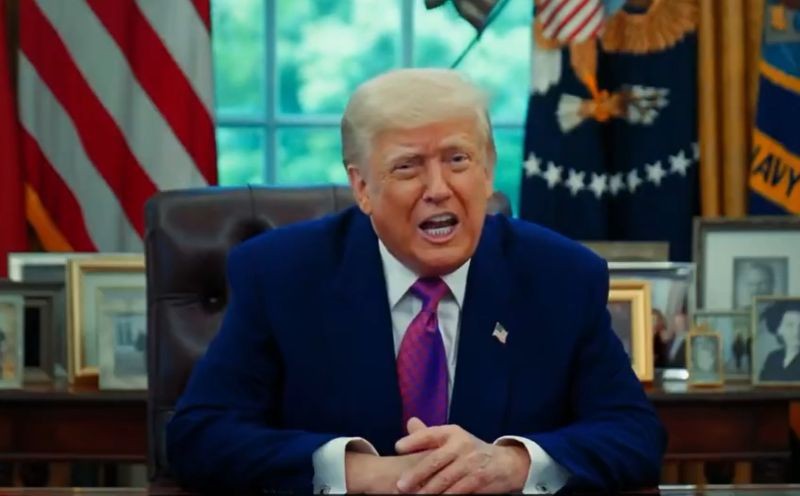
President Donald Trump, in his second term, has made resetting US-Russia relations a foreign policy priority. He reportedly sees the bill as a roadblock to his diplomatic ambitions.
According to The Wall Street Journal, Trump has been lobbying Senator Graham to soften the bill’s language, especially by changing mandatory terms like “shall” to “may”—giving the president discretion over enforcement.
He is also seeking broad waiver powers that would allow exemptions for strategic partners, essential goods, and national security concerns.
Trump’s core argument is that automatic sanctions erode presidential flexibility and may hinder efforts to end the war through diplomacy instead of pressure.
Strong bipartisan backing in Congress
Despite White House reservations, the bill has attracted overwhelming support in the Senate.
“I’ve got 84 co-sponsors for a Russian sanctions bill that is an economic bunker-buster against China, India and Russia... I think that bill is going to pass,” Senator Graham told NBC News recently. “We’re going to give the president a waiver. It will be a tool in his toolbox to bring Putin to the table.”
Senate Majority Leader John Thune echoed the momentum behind the proposal. “There’s a high level of interest here in the Senate, on both sides of the aisle, and we very well could take it up in this work period,” Thune told reporters earlier this month.
Discussions are underway with the White House to coordinate the bill’s timing with diplomatic efforts.
Possible delays and changes ahead
Still, the legislation is expected to evolve before becoming law.
Matt Zweig, senior policy director at FDD Action—an advocacy group linked to the Foundation for Defense of Democracies—told Politico that revisions are likely as it advances through Congress and during talks with the administration.
“With sanctions legislation, you’re also normally dealing with iterative processes where you would want to go through every nook and cranny,” Zweig said.
Supporters vs critics
While backers of the bill argue that only strong, punitive measures can force Russia to the negotiating table, critics warn of serious downsides.
They argue that inflexible mandates could alienate allies, undermine global unity against Moscow, and trigger economic fallout that harms US interests as well.
The most contentious part of the bill—the 500% tariff on imports from countries buying Russian energy—has raised alarm for its potential to disrupt global trade and backfire. While the measure sends a strong political message, its real-world execution could come with a heavy economic price.
Support Our Journalism
We cannot do without you.. your contribution supports unbiased journalism
IBNS is not driven by any ism- not wokeism, not racism, not skewed secularism, not hyper right-wing or left liberal ideals, nor by any hardline religious beliefs or hyper nationalism. We want to serve you good old objective news, as they are. We do not judge or preach. We let people decide for themselves. We only try to present factual and well-sourced news.
Support objective journalism for a small contribution.