


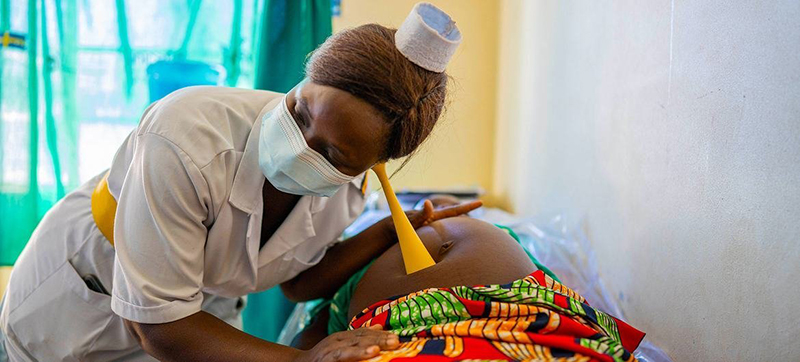
 Africa Maternal Health
Africa’s advances in maternal, infant mortality face setbacks: WHO
New York: Across Africa, efforts to reduce the number of women and infants dying in childbirth are set to slow without a substantial increase in investment, the UN health agency said on Thursday.
New data from the World Health Organization (WHO) indicates that by 2030 in sub-Saharan Africa, 390 women will die in childbirth for every 100,000 live births.
This is more than five times higher than Sustainable Development Goal (SDGs) targets – and well above the global average of 211.
“For many African women, childbirth remains a persistent risk and millions of children do not live long enough to celebrate their fifth birthday”, said Matshidiso Moeti, WHO’s Regional Director for Africa.
A closer look
According to WHO’s Atlas of African Health Statistics 2022, on average today, 72 infants die in childbirth, per 1,000 successful births – more than twice the target set for 2030.
At the current 3.1 per cent annual rate of decline, there will be an expected 54 deaths per 1,000 live births by 2030, which is far above the target of fewer than 25 per 1,000.
“Africa has scored some of the fastest reduction rates globally in key health objectives, but the momentum is waning”, Dr. Moeti warned.
Investment boost needed
The report assessed nine targets related to health SDGs and found that at the current pace, increased investment is imperative to accelerate progress.
Reducing maternal deaths is among the most difficult of targets to achieve.
In sub-Saharan Africa by 2030, for every 100,000 live births, an estimated 390 women will die in childbirth, the Atlas reports.
To reach the SDG target, Africa will need an 86 per cent reduction from the last data update in 2017 – an unrealistic feat at the current rate of decline, said WHO.
COVID effect
The slowdown has been exacerbated by the disruptive effect of the COVID-19 pandemic, including in crucial health services ranging from postnatal care for women and newborns, to neonatal intensive care and immunization services.
Since 2021, Africa has also faced a resurgence in vaccine-preventable disease outbreaks.
Between January and March this year, measles cases for example, rose by 400 per cent compared with the same period last year.
Stumbling blocks
Inadequate investment in health and funding for health programmes are just two of the major obstacles in meeting the health SDGs.
WHO surveyed 47 African countries and found that the region has a ratio of 1.55 physicians, nurses and midwives per 1,000 people, which is below the UN agency’s threshold of 4.45 health workers per 1,000 people needed to deliver essential services and achieve universal health coverage.
The Atlas points out that skilled birth attendants are crucial for the well-being of women and newborns, yet only 65 per cent of births in Africa benefit from this important service – the lowest in the world, and far from the 2030 target of 90 per cent.
Meanwhile, neonatal deaths account for nearly half of all under-fives who die.
Accelerating the agenda to meet its reduction goal will be a major step towards reducing the under-five mortality rate to fewer than 25 deaths per 1,000 live births.
The Atlas also presents the latest data for more than 50 health-related SDGs indicators and provides comprehensive country-level statistics for the region.
Support Our Journalism
We cannot do without you.. your contribution supports unbiased journalism
IBNS is not driven by any ism- not wokeism, not racism, not skewed secularism, not hyper right-wing or left liberal ideals, nor by any hardline religious beliefs or hyper nationalism. We want to serve you good old objective news, as they are. We do not judge or preach. We let people decide for themselves. We only try to present factual and well-sourced news.
Support objective journalism for a small contribution.


