


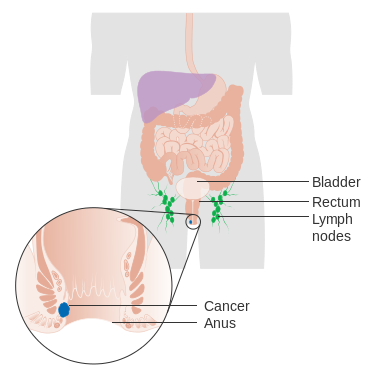
Anal cancer rising worldwide, says study
The authors say population-based preventive measures, including human papillomavirus vaccination and advocacy for safe sexual behaviors, may help curb the surging burden of the disease. The study is published early online in the International Journal of Epidemiology.
Anal cancer is relatively rare, often-neglected cancer.
The most recent estimates (2008) were that only about 27,000 cases occurred worldwide (14,500 cases in women and 12 500 in men).
Previous studies have reported a relatively rapid increase in the incidence rate in some very high-income countries. However, trends elsewhere are largely unknown.
The current study, led by Farhad Islami, M.D., Ph.D., strategic director of cancer surveillance research at the American Cancer Society, used the latest data using data from the International Agency for Research on Cancer’s Cancer Incidence in Five Continents series to estimate anal cancer incidence in 18 countries in four continents (excluding Africa), including several countries that are economically less developed than those studied previously.
They found incidence of anal cancer has been increasing—either in both sexes or in women—in many populations, especially in the Americas, Northern and Western Europe, and Australia. In those populations, one subtype, anal squamous cell carcinoma (ASCC) was substantially more common than others, and was the main contributor to the increase in incidence. Incidence for the other major subtype, anal adenocarcinoma (AAC) has been stable or decreasing in most populations.
“The reason for the increasing ASCC incidence rates in many populations is unclear, but is likely to reflect changes in prevalence of environmental risk factors,” say the authors. Those include infection with human papilloma virus (HPV), which is found in almost all cases of ASCC.
While HPV vaccination can provide protection against anal HPV infection, the authors note that it is
probably too early to see preventive effects of vaccination of young adults on anal cancer incidence rates. Also, the vaccine is either not routinely administered or uptake is suboptimal in countries.
“Certain preventive measures if implemented, including HPV vaccination and campaigns for safer sexual behaviors, would serve to prevent a substantial number of anal cancer cases in the future,” the authors conclude.
Image: Wikipedia Commons
Support Our Journalism
We cannot do without you.. your contribution supports unbiased journalism
IBNS is not driven by any ism- not wokeism, not racism, not skewed secularism, not hyper right-wing or left liberal ideals, nor by any hardline religious beliefs or hyper nationalism. We want to serve you good old objective news, as they are. We do not judge or preach. We let people decide for themselves. We only try to present factual and well-sourced news.
Support objective journalism for a small contribution.


