October 05, 2026 05:12 pm (IST)

Follow us:


Angina drug could inform a new strategy to fight cryptococcosis: Study
Birmingham, Jun 9 (IBNS): A drug, more commonly used in the treatment of angina, could be the focus of a new strategy in fighting the fatal fungal infection cryptococcosis.
Researchers from the University of Birmingham found that the compound fendiline hydrochloride could be used to stimulate a patient’s own white blood cells to fight the disease more effectively, instead of trying to use drugs that directly kill the fungus itself.
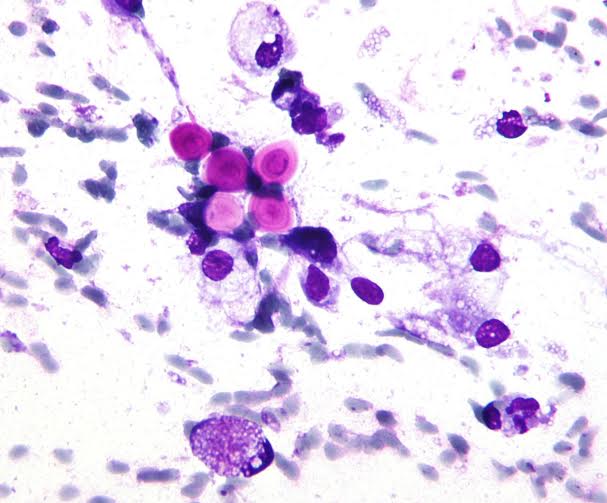
The findings, published in the International Journal of Antimicrobial Agents, propose a role for calcium-channel blockers such as fendiline hydrochloride as potential inhibitors to the survival of Cryptococcus neoformans, the pathogen which causes cryptococcosis, and represent a promising strategy for future anticryptococcal drug design and therapy.
Professor Robin May, from the University of Birmingham, explained: “Fungi are intrinsically more difficult to target than bacteria, because they are much more closely related, evolutionarily, to humans. Finding an essential pathway in a fungus that you could inhibit, which doesn’t exist in humans, is very difficult. Therefore the approach of stimulating your own immune system to kill the fungus, instead of killing it directly through treatment, is potentially more powerful.”
In order to cause disease, Cryptococcus neoformans hides inside the patient’s own white blood cells, making it particularly difficult to treat.
The findings, published in the International Journal of Antimicrobial Agents, propose a role for calcium-channel blockers such as fendiline hydrochloride as potential inhibitors to the survival of Cryptococcus neoformans, the pathogen which causes cryptococcosis, and represent a promising strategy for future anticryptococcal drug design and therapy.
Professor Robin May, from the University of Birmingham, explained: “Fungi are intrinsically more difficult to target than bacteria, because they are much more closely related, evolutionarily, to humans. Finding an essential pathway in a fungus that you could inhibit, which doesn’t exist in humans, is very difficult. Therefore the approach of stimulating your own immune system to kill the fungus, instead of killing it directly through treatment, is potentially more powerful.”
In order to cause disease, Cryptococcus neoformans hides inside the patient’s own white blood cells, making it particularly difficult to treat.
In the Birmingham Drug Discovery facility, the team screened 1,200 off-patent, FDA-approved, drugs to identify candidates that might be redeployed to fight cryptococcosis by triggering the white blood cells to recognise that they are infected and to kill the fungus hiding inside them.
After initial screening, 19 of those compounds in the Prestwick Chemical Library of FDA-approved small molecules showed promise for significantly reducing intracellular growth of the pathogen.
Secondary screening and host cell toxicity assays ruled out many of these molecules, but highlighted fendiline hydrochloride, more commonly used in the treatment of angina and chest pain, as a potential candidate for the development of future anticryptococcal therapies.
Professor May said: “Although calcium channel blockers have not previously been identified as a potential anticryptococcal agent, their ability to work in this way makes sense. We have previously shown that Cryptococcus perturbs calcium signalling when living inside human cells, probably in order to trick the cell into not killing it. Consequently, it’s possible that fendiline hydrochloride works by overcoming this perturbation and restoring normal calcium dynamics, helping the host to kill the fungus.”
Cryptococcosis neoformans poses a major threat to immunocompromised patients and is a leading killer of HIV patients worldwide.
HIV/AIDS patients are particularly prone to cryptococcal infections, with an estimated overwhelming disease burden of about one million cases of cryptococcal meningitis per year. The highest incidence of cryptococcal meningitis related deaths in HIV-positive patients occurs in sub-Saharan Africa with an associated mortality of 70%.
The infection process begins with inhalation of infectious agents (spores or dessicated yeasts) resulting in a primary pulmonary infection, which can further disseminate to the central nervous system causing meningitis.
Cryptococci are particularly difficult to treat with antifungal agents due to their ability to manipulate and exist within the host’s immune response.
Dr Rebecca Hall, also from the University of Birmingham, added: “Considering the poor status of current anticryptococcal drugs, new treatment options for cryptococcosis are much needed. Though the relatively high dose of fendiline hydrochloride required renders it unfit for clinical deployment against cryptococcosis in itself, our study presents an opportunity to approach treatment of this much neglected disease in a new way.”
After initial screening, 19 of those compounds in the Prestwick Chemical Library of FDA-approved small molecules showed promise for significantly reducing intracellular growth of the pathogen.
Secondary screening and host cell toxicity assays ruled out many of these molecules, but highlighted fendiline hydrochloride, more commonly used in the treatment of angina and chest pain, as a potential candidate for the development of future anticryptococcal therapies.
Professor May said: “Although calcium channel blockers have not previously been identified as a potential anticryptococcal agent, their ability to work in this way makes sense. We have previously shown that Cryptococcus perturbs calcium signalling when living inside human cells, probably in order to trick the cell into not killing it. Consequently, it’s possible that fendiline hydrochloride works by overcoming this perturbation and restoring normal calcium dynamics, helping the host to kill the fungus.”
Cryptococcosis neoformans poses a major threat to immunocompromised patients and is a leading killer of HIV patients worldwide.
HIV/AIDS patients are particularly prone to cryptococcal infections, with an estimated overwhelming disease burden of about one million cases of cryptococcal meningitis per year. The highest incidence of cryptococcal meningitis related deaths in HIV-positive patients occurs in sub-Saharan Africa with an associated mortality of 70%.
The infection process begins with inhalation of infectious agents (spores or dessicated yeasts) resulting in a primary pulmonary infection, which can further disseminate to the central nervous system causing meningitis.
Cryptococci are particularly difficult to treat with antifungal agents due to their ability to manipulate and exist within the host’s immune response.
Dr Rebecca Hall, also from the University of Birmingham, added: “Considering the poor status of current anticryptococcal drugs, new treatment options for cryptococcosis are much needed. Though the relatively high dose of fendiline hydrochloride required renders it unfit for clinical deployment against cryptococcosis in itself, our study presents an opportunity to approach treatment of this much neglected disease in a new way.”
Support Our Journalism
We cannot do without you.. your contribution supports unbiased journalism
IBNS is not driven by any ism- not wokeism, not racism, not skewed secularism, not hyper right-wing or left liberal ideals, nor by any hardline religious beliefs or hyper nationalism. We want to serve you good old objective news, as they are. We do not judge or preach. We let people decide for themselves. We only try to present factual and well-sourced news.
Support objective journalism for a small contribution.



Latest Headlines
Life expectancy is rising again after COVID-19 shock: WHO reveals global health comeback
Sat, Oct 03 2026
From physiotherapy to AI, robotics: MRCCon 2026 highlights how medical rehabilitation has transformed in 27 years
Fri, Oct 02 2026
Study finds chewing tobacco linked to 2.5 lakh deaths worldwide; India among worst-affected countries
Fri, Oct 02 2026
Kolkata's Desun Hospital's Cardio Care Walkathon daws 200 participants on World Heart Day
Fri, Oct 02 2026
Insomnia is more than just sleepless nights: Study finds higher stroke, dementia risk
Tue, Sep 29 2026
Manipal Hospital Dhakuria hosts ‘Heart of Innovation Cardiac Summit’ ahead of World Heart Day
Mon, Sep 28 2026
Eating with your partner could lower blood sugar spikes, study finds
Sun, Sep 27 2026