


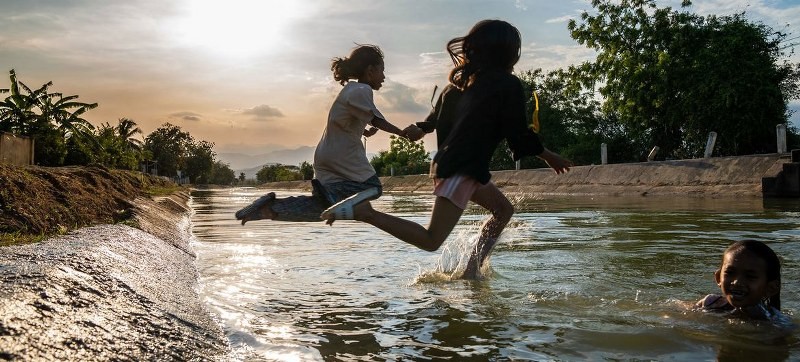
Asia is warming twice as fast as the rest of the world: WMO
In April 2024, China broke the average temperature record that month. The following month, it was the same - and then again in August. And September. And November.
While there are records which exist to be broken – Olympic ones, for example -these monthly temperature extremes are not medal worthy. And yet, China was not the only Asian country to set a flurry of new highs in 2024.
The continent is warming twice as fast as the global average, according to a report released Monday by the World Meteorological Organization (WMO). This rate of warming – which shows no signs of stopping – is leading to devastating consequences for lives and livelihoods across the region, and no country is exempt from the consequences.
“Extreme weather is already exacting an unacceptably high toll,” said WMO Secretary-General Celeste Saulo on Monday.
Large landmass, warmer temperatures
The WMO report said that Asia is warming twice as fast as global averages because of its large landmass, explaining that temperatures over land increase more quickly than those over sea.
“Variations in surface temperature have a large impact on natural systems and on human beings,” the report said.
The oceans around Asia are also experiencing temperature increases with surface temperatures in the Indian and Pacific Oceans reaching record levels in 2024.
Tweet URL
Moreover, prolonged heat waves, both on land and sea, wreaked havoc across the region, leading to melting glaciers and rising sea levels.
Too much and too little water
Some countries and communities in Asia were ravaged by record rainfall. Northern Kerala in India, for example, experienced a fatal landslide which killed over 350 people.
Record rainfall coupled with snow melt in Kazakhstan, which is home to thousands of glaciers, led to the worst flooding in 70 years.
Others were ravaged by the exact opposite problem – not enough rainfall. A summer long drought in China, for example, affected over 4.76 million people and damaged hundreds of thousands of hectares of crops.
WMO emphasized in the report that the only way to adapt to these increasingly polar weather patterns is to install more comprehensive early warning systems which are coupled with capacity building measures that enable communities to be more resilient.
Nepal: A case study in preparedness
The WMO report lauded the success that Nepal has had in installing early warning systems which monitor flooding risks, among other things, even as it said that more comprehensive action was necessary.
Between 26 and 28 September 2024, Nepal experienced extreme rainfall which created landslides and flooding across large swaths of the country. 246 people were killed, 178 injured and over 200 missing in the wake of the climate emergency.
While the impact of the crisis was extreme, early flood warning systems enabled communities to prepare for evacuation in addition to crisis responders to reach the worst hit regions quickly.
“This is the first time in 65 years that the flooding was this bad. We had zero casualties thanks to preparedness and rescue measures, but the damage was extensive,” said Ramesh karki, Mayor of Barahakshetra, an affected municipality in Eastern Nepal.
Moreover, comprehensive national protocols on emergency funding ensured that funding for humanitarian and rebuilding needs was quickly dispersed throughout the country.
WMO said that they are working with the Nepalese government and other partners to continue improving upon these systems.
“The work of National Meteorological and Hydrological Services and their partners is more important than ever to save lives and livelihoods,” Ms. Saulo said.
Support Our Journalism
We cannot do without you.. your contribution supports unbiased journalism
IBNS is not driven by any ism- not wokeism, not racism, not skewed secularism, not hyper right-wing or left liberal ideals, nor by any hardline religious beliefs or hyper nationalism. We want to serve you good old objective news, as they are. We do not judge or preach. We let people decide for themselves. We only try to present factual and well-sourced news.
Support objective journalism for a small contribution.


