At Security Council, top UN health officials spotlight role of emergency preparedness in Ebola fight
Briefing the UN Security Council earlier this morning on the global response to Ebola, World Health Organization (WHO) Executive Director Dr. Margaret Chan observed that lacking public health capacities and infrastructures had combined to expose a dangerous vulnerability across the West African belt – from Guinea to Liberia – leading to an outbreak unprecedented in scale and duration.
Only an equally unprecedented response by the international community and by individual governments, she added, had helped stem the advancing tide of the disease.
Indeed, if the current intensity of case detection and contact tracing is sustained, the virus can be soundly defeated by the end of this year. “That means getting to zero and staying at zero,” she declared.
“Surveillance and response capacities have vastly improved. We have a very good picture of current chains of transmission and know how to break them,” Dr. Chan told the 15-member body. “This is a night-and-day difference from the situation less than a year ago.”
“I can assure you: the progress is real and it has been hard-earned,” she added.
Among the measures to be hard-wired into future preparations, the WHO chief underlined a series of critical reforms she would implement with her own UN agency, including the establishment of a global health emergency workforce, an operational platform that can shift into high gear quickly, performance benchmarks, and avenues aimed at acquiring the needed funding.
Beyond that, she said, individual governments had also greatly improved their healthcare outlook in steps that greatly increased the prospects that Ebola-affected communities will survive.
“The Ebola outbreak in West Africa shocked the world out of its complacency about the infectious disease threat,” Dr. Chan continued. “We witnessed the decisive role of vigilance and readiness in countries that experienced an important case.”
The first cases of the current Ebola outbreak were reported in March 2014 in Guinea and quickly spread across the region to Sierra Leone and Liberia killing more than 11,000 people in an epidemic that also saw isolated cases pop up in the United States and in Europe. At the time of writing, however, no new cases have been reported prompting some optimism among the international medical community.
Echoing Dr. Chan’s message, the Secretary-General’s Special Envoy on Ebola, Dr. David Nabarro, similarly spotlighted three components of the Ebola response – from the nurturing of “powerful and decisive leadership” and the “importance of community ownership” to the response to “the value of working together in long-term solidarity.”
“When people themselves define the support they require, when they are able quickly to access the assistance they need, when they need it, challenges and obstacles are quickly overcome,” he explained.
Above all, Dr. Nabarro cautioned, unexpected new outbreaks of disease in the future will demand more honed and cohesive emergency preparedness planning on behalf of the international community as a whole.
“Human security depends on being able to anticipate these outbreaks, to react quickly, to curtail spread and to prevent suffering,” he concluded. “Societies that collectively recognize threats to health, that proactively address these challenges, and that engage with their health systems in the response are at the heart of secure nations and a safer world.”
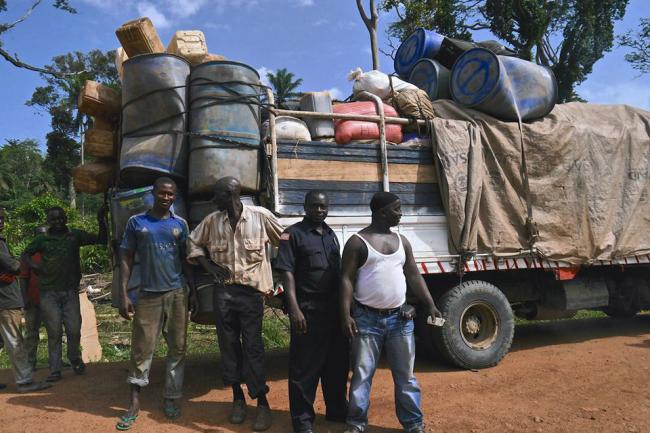
Photo: WHO/M. Winkler
Support Our Journalism
We cannot do without you.. your contribution supports unbiased journalism
IBNS is not driven by any ism- not wokeism, not racism, not skewed secularism, not hyper right-wing or left liberal ideals, nor by any hardline religious beliefs or hyper nationalism. We want to serve you good old objective news, as they are. We do not judge or preach. We let people decide for themselves. We only try to present factual and well-sourced news.
Support objective journalism for a small contribution.