


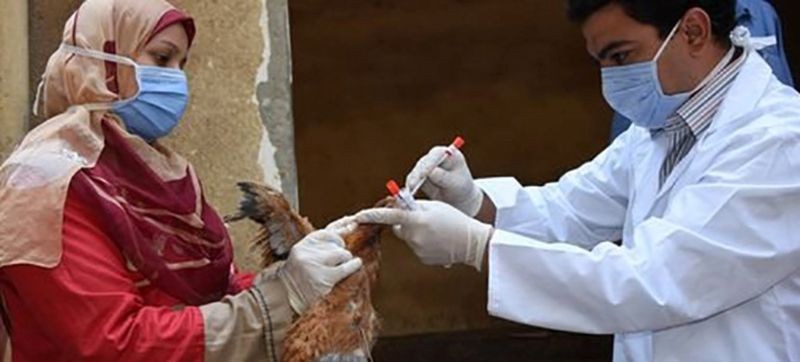
 Avian Flu
Avian flu reported in 108 countries across five continents, warns UN health agency
Avian influenza has caused the deaths of more than 300 million birds worldwide and the virus “is increasingly crossing species barriers”, according to UN health officers.
In an update on the mutating virus - known as H5N1 – Dr. Madhur Dhingra from the Food and Agriculture Organization, FAO, said that it had “spilled over into wildlife”.
More than 500 bird species have been infected along with at least 70 mammalian species, including the endangered California condor and polar bears.
In regions that are heavily reliant on poultry as a primary source of protein, the FAO medic insisted that avian influenza “poses a serious threat to food and nutrition security”.
Economic damage
Dr Dhingra warned that hundreds of millions of people’s livelihoods have been affected by the virus – an economic burden on farmers that could prevent them from investing in adequate biosafety measures.
Following the emergence of H5N1 influenza virus in dairy cattle, the WHO has joined calls for strengthened surveillance and biosecurity on farms, to keep animals and people safe.
The UN health agency said that in 2024, 76 people have been infected with the H5 avian influenza strain, and most were farm workers. More than 60 cases originated in the US, which has also reported outbreaks of H5 in wildlife and poultry and, more recently, in dairy cattle.
There have also been cases reported in Australia, Canada, China, Cambodia and Viet Nam.
Low risk to humans – for now
Dr. Maria Van Kerkhove, who currently serves as Director of Epidemic and Pandemic Threat Management for the WHO, said that based on the latest science, “we assess the risk of infection for the public – you and I – is currently low.”
But if you work on a farm, she cautioned – and are exposed to infected animals – “we assess the current public health risk to be low-to-moderate,” depending on the level of personal protection taken.
There is no evidence so far that the H5N1 viruses have adapted to spread between people and there has been no reported cases of human-to-human transmission.
No room for complacency
“We must remember, however, that this can change quickly,” the UN pandemic expert added, “as the virus is evolving and we must be prepared for such a scenario.”
Every case that occurs in humans must therefore be investigated thoroughly.
Dr. Van Kerkhove also stressed the importance of drinking pasturised milk – and if that’s not available, of heating milk before consumption.
“We want to reiterate the critical importance of using a One Health approach across sectors – globally, nationally, and sub-nationally - to tackle avian influenza effectively, to minimize the risk in animals and humans,” she concluded.
Support Our Journalism
We cannot do without you.. your contribution supports unbiased journalism
IBNS is not driven by any ism- not wokeism, not racism, not skewed secularism, not hyper right-wing or left liberal ideals, nor by any hardline religious beliefs or hyper nationalism. We want to serve you good old objective news, as they are. We do not judge or preach. We let people decide for themselves. We only try to present factual and well-sourced news.
Support objective journalism for a small contribution.


