


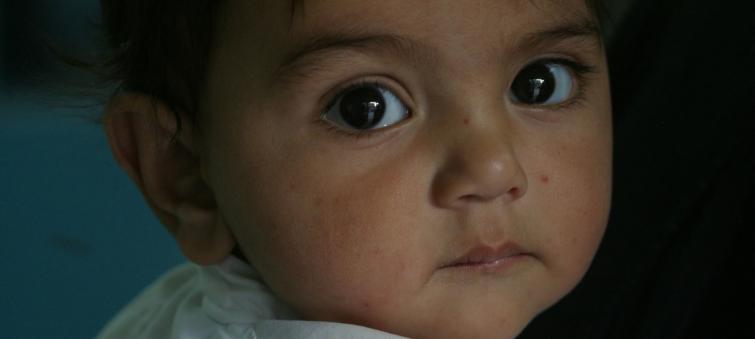
Baby foods high in sugar, inappropriately marketed in Europe, reveal two UN studies
New York, July 16 (IBNS): Proper nutrition for newborn babies into early childhood is key to development and good health in later life, according to the Regional Director of the United Nations World Health Organization (WHO) in Europe, as she launched two new studies on Monday.
The studies from WHO Europe show that a high proportion of baby foods are incorrectly marketed as suitable for infants under the age of six months, when in fact much of it contains inappropriately high levels of sugar.
WHO’s long-standing recommendation spells out that children should be breastfed, exclusively, for the first six months. Moreover, its 2016 global Guidance on Ending the Inappropriate Promotion of Foods for Infants and Young Children explicitly states that commercial complementary foods should not be advertised for infants under six months of age.
“Good nutrition in infancy and early childhood remains key to ensuring optimal child growth and development, and to better health outcomes later in life – including the prevention of overweight, obesity and diet-related noncommunicable diseases – thereby making United Nations Sustainable Development Goal 3 to ensure healthy lives and promote well-being for all at all ages much more achievable,” said Zsuzsanna Jakab.
Nutritional quality break-down
To determine which foods are inappropriate for children between the ages of six and 36 months, WHO developed a draft Nutrient Profile Model (NPM), which it submitted to Member States and others to assess.
WHO/Europe also developed a methodology for collecting nutritional content data on commercial baby foods from labels, packaging, promotions and claims that was used between November 2017 and January 2018 in Vienna, Austria; Sofia, Bulgaria; Budapest, Hungary; and Haifa, Israel.
Based on 516 stores and 7,955 products retailed for babies and young children, the data revealed that from 28 to 60 per cent of the products in all four cities were marketed as suitable for infants under the age of six months.
Although this is permitted under European Union law, it goes against both the WHO International Code of Marketing of Breastmilk Substitutes and the WHO Guidance.
Moreover, in three of the cities, over 30 per cent of the calories in half or more of the products came from sugars. Around one-third listed sugar, concentrated fruit juice or other sweetening agents as an ingredient, which could affect children’s taste preferences for sweeter foods.“Foods for infants and young children are expected to comply with various established nutrition and compositional recommendations”, said João Breda, Head of the WHO European Office for the Prevention and Control of Noncommunicable Diseases. “Nonetheless, there are concerns that many products may still be too high in sugars”.
Although foods such as fruits and vegetables that naturally contain sugars are appropriate for infants and young children, the very high level of free sugars in pureÌed commercial products is cause for concern.
The draft NPM was developed by following recommended WHO steps and informed by several data sources, including a literature review. It refers to existing European Commission directives and Codex Alimentarius standards, and reflects the approach used for the WHO/Europe NPM for children over 36 months.
The draft NPM was validated against label information from 1,328 products on the market in three countries from 2016 to 2017, and pilot-tested in seven additional countries in 2018 with a further 1,314 products.
UNICEF/UNI38976/LeMoyne
Support Our Journalism
We cannot do without you.. your contribution supports unbiased journalism
IBNS is not driven by any ism- not wokeism, not racism, not skewed secularism, not hyper right-wing or left liberal ideals, nor by any hardline religious beliefs or hyper nationalism. We want to serve you good old objective news, as they are. We do not judge or preach. We let people decide for themselves. We only try to present factual and well-sourced news.
Support objective journalism for a small contribution.


