Bhutan, Maldives eliminate measles
The two countries have become the first in WHO South-East Asia Region to be verified for having interrupted endemic measles virus transmission, ahead of the 2020 Regional target.
“Bhutan and Maldives have demonstrated how a highly contagious virus like measles can be eliminated. WHO commends them for this momentous public health achievement,” Poonam Khetrapal Singh, Regional Director of WHO South-East Asia, said, announcing the findings and conclusions of the WHO South-East Asia Regional Verification Commission for Measles Elimination and Rubella control.
The Regional Director said, “The strongest political commitment, alongside the concerted efforts of health workers, officials and partners at all levels, has helped achieve this landmark success, which is a boost to the Region’s effort to eliminate measles and control rubella”.
Bhutan and Maldives launched their Expanded Program on Immunization in 1979 and 1976 respectively, and since then worked indefatigably to increase access to immunization services.
“Both countries achieved and maintained high coverage of measles vaccination, despite geographical challenges. They also established strong laboratory-supported surveillance for measles, and have conducted detailed case investigation and tracking, right up to the very last case,” Khetrapal Singh said.
Maldives has not reported any case of indigenous measles since 2009, and Bhutan since 2012.
To fortify their progress, both countries have been carrying out mass vaccination campaigns with measles and rubella vaccine covering high-risk populations.
“While endemic measles virus transmission has been interrupted, both Bhutan and Maldives continue to be at risk of measles virus importation. Hence, both countries must continue efforts against measles and rubella and protect high-risk populations to effectively deal with any importations,” Dr Khetrapal Singh said.
Measles elimination and rubella control by 2020 has been one of WHO South-East Asia Region’s flagship priority programmes since Khetrapal Singh became Regional Director in February 2014.
An estimated 620 000 measles deaths have been averted in 2016 alone following vaccination carried out by Member countries. Nearly 107 million children have been reached with an additional dose of measles vaccine through mass vaccination between 2013 and 2016.
All countries have introduced two doses of measles containing vaccine and have been making focused efforts and progress against measles and rubella. All countries are conducting case-based surveillance for measles and rubella, and Regional surveillance standards have been revised to meet elimination standards. The measles laboratory network has been expanded from 23 laboratories in 2013 to 39 WHO accredited laboratories in 2016.
“To meet the 2020 measles elimination and rubella control goals, all countries need to make greater efforts to increase measles vaccination coverage through childhood immunization programmes, as nearly 4.7 million children remain unvaccinated against measles in the Region annually,” Khetrapal Singh said.
The overarching goal of universal health coverage and the core Sustainable Development Goal theme of leaving no one behind provide new opportunities to further improve immunization programmes, enhance access to new vaccines, and strengthen health systems to sustain the gains made so far, she said.
The measles elimination and rubella control strategy in WHO South-East Asia Region is based on four key approaches – achieving and maintaining at least 95% vaccination coverage with two doses of measles and rubella vaccine through routine and supplementary immunization; developing and sustaining a sensitive case based surveillance that meets recommended performance indicators; developing and maintaining an accredited measles and rubella laboratory network; and strengthening support and linkages for these strategies.
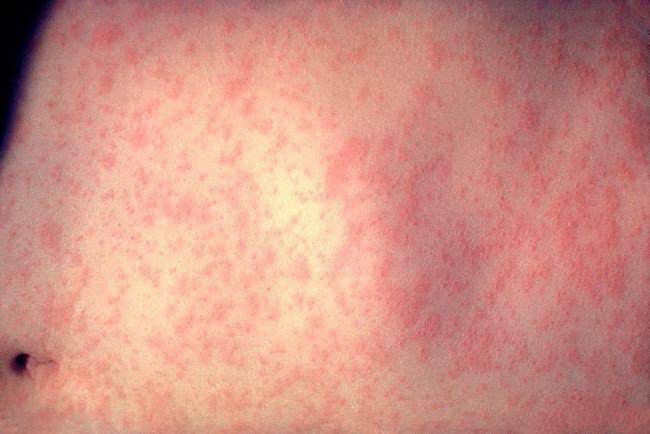
Image: Wikimedia Commons
Support Our Journalism
We cannot do without you.. your contribution supports unbiased journalism
IBNS is not driven by any ism- not wokeism, not racism, not skewed secularism, not hyper right-wing or left liberal ideals, nor by any hardline religious beliefs or hyper nationalism. We want to serve you good old objective news, as they are. We do not judge or preach. We let people decide for themselves. We only try to present factual and well-sourced news.
Support objective journalism for a small contribution.