


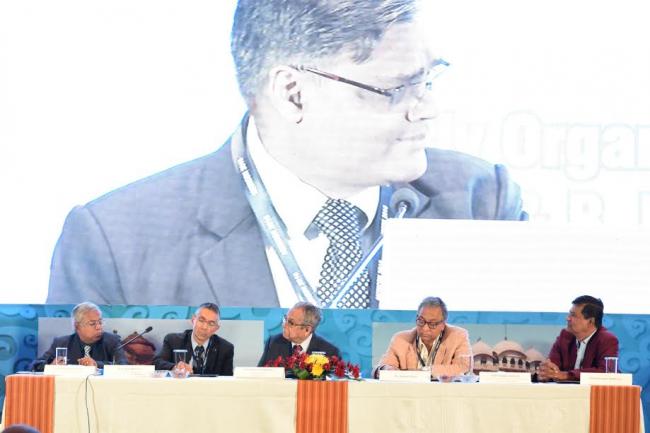
Breathlessness is not a prominent symptom of hypoxaemia: UK expert
"Acute hypoxemic respiratory failure (AHRF) is severe arterial hypoxemia that is refractory to supplemental oxygen and respiratory failure results from inadequate gas exchange by the respiratory system," Consultant Respiratory Physician of UK's Hull & East Yorkshire NHS Hospitals, Dr. Simon Hart, said here at the MEDICON International 2016.
Talking about hypoxaemia, Dr. Simon Hart said, "Hypoxaemia is dangerous when SaO2 is less than 85% and PaO2 is less than 7 kPa."
Dr. Hart also said that the SpO2, which is an estimate of the amount of oxygen in the blood, was not aimed to 100 for the risk of hypercapnic respiratory failure in acute exacerbation of COPD (Chronic Obstructive Pulmonary Disease).
"100 SpO2 causes delayed recognition of deteriorating patient and it may generate free radicals, exacerbating tissue injury," Dr. Hart added.
The physician also suggested not to waste time with the NIV (Non-Invasive Ventilation), during the treatment of hypoxaemia.
"Administering oxygen during treatment is very important. The delivery of oxygen should be 15 LPM via reservoir mask to a critically ill patient, 5-10 LPM and 2-6 LPM via simple face mask and nasal cannulae respectively to a less unwell patient and 1-2 LPM via nasal cannulae and 28% or 24% via venturi mask to patient, who is at the risk of hypercapnia," Dr. Simon Hart added.
He also noted that high altitude, which led to cause breathlessness, might result hypoxaemia.
"During a long distance flight at a high altitude, we feel breathlessness. It's okay if the flight journey is of 2-3 hours. But it could trouble the people with heart disease, when the flight journey is more than 10 hours," Hart further said.
Starting from today, the third edition of Medicon International conference, jointly hosted by Peerless Hospital, B. K. Roy Foundation and Royal College of Physicians of Edinburgh, will continue till Sunday (Dec 18).
Support Our Journalism
We cannot do without you.. your contribution supports unbiased journalism
IBNS is not driven by any ism- not wokeism, not racism, not skewed secularism, not hyper right-wing or left liberal ideals, nor by any hardline religious beliefs or hyper nationalism. We want to serve you good old objective news, as they are. We do not judge or preach. We let people decide for themselves. We only try to present factual and well-sourced news.
Support objective journalism for a small contribution.


