June 28, 2026 07:59 pm (IST)
Follow us:
facebook-white sharing button
twitter-white sharing button
instagram-white sharing button
youtube-white sharing button
Fresh paper leak rocks India: Maharashtra TET postponed a day before exam, over 4 lakh aspirants affected | Pune fort murder case: Siya Goyal's brother says family would have called off marriage if she had objected | Donald Trump gets a road named after him in India, says 'Thank You!' | Fresh setback for Gautam Adani? US judge asks DoJ to justify dropping criminal charges | Ram Mandir Trust chief Champat Rai resigns as alleged donation siphoning row escalates | Ram Mandir fund row deepens: 8 arrested days after BJP called allegations 'false narrative' | 'Who tied the hands of CBI?': Calcutta HC on RG Kar case; victim's mother, now BJP MLA, says she is 'deeply disturbed' | Construction comes to a standstill at nearly 700 Kolkata projects after Taratala warehouse tragedy kills 15 | World Cup shocker! Ecuador stun Germany 2-1, storm into Round of 32 | Iran-US conflict: Cargo vessel hit near Strait of Hormuz, UN agency pauses evacuation operations
Wikimedia Commons

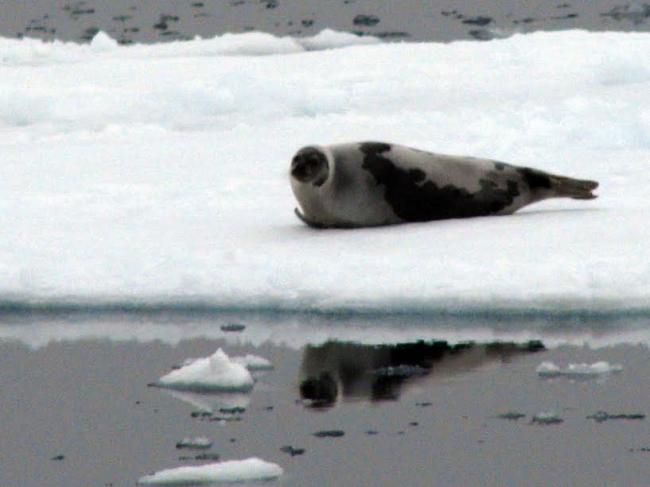
Canada: Poor ice conditions compel seals to move to thicker ice grounds

| | Apr 19, 2017, at 04:39 am
Toronto, Apr 18 (IBNS): Officials from the Fisheries Department said that harp seals who usually reproduces in the Gulf of St. Lawrence, had been forced, this year, to move off coast of Newfoundland, which with abundant thick ice, provided a favourable reproduction condition to the species, media reports said.

According to Fisheries and Oceans Canada reports, the number of harp seal pups born in a year is estimated from time to time by using aerial surveys conducted in the spring, when the seals have pulled out onto the ice to have their pups.

Estimates of abundance of harp seals have been found using a population model that incorporates annual reproductive rates and periodic estimates of pup production as well as information on removals.

Scientist Garry Stenson says the seal herd is spread out over a much larger area than usual instead of congregating in a few areas.

Stevenson tweeted that he followed timing of births by identifying Newfoundland pups’ developmental stage.
 

(Reporting by Asha Bajaj)

Support Our Journalism

We cannot do without you.. your contribution supports unbiased journalism

IBNS is not driven by any ism- not wokeism, not racism, not skewed secularism, not hyper right-wing or left liberal ideals, nor by any hardline religious beliefs or hyper nationalism. We want to serve you good old objective news, as they are. We do not judge or preach. We let people decide for themselves. We only try to present factual and well-sourced news.

Support objective journalism for a small contribution.