


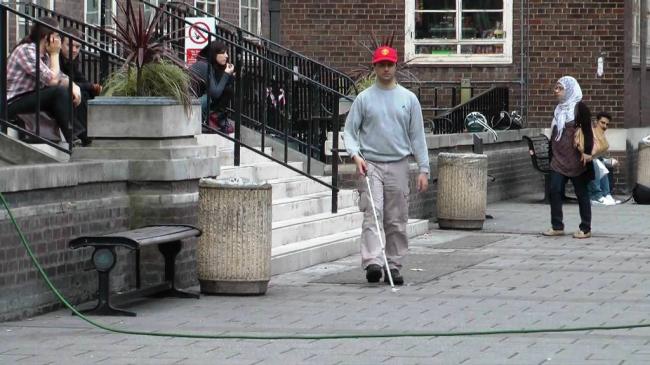
Cases of blindness to rise to 115 million by 2050, finds study
Led by Professor Rupert Bourne of Anglia Ruskin University, the study provides large-scale analysis of blindness and vision loss across the world.
The research reveals that 2.05% of men and 2.79% of women in the UK have moderate to severe vision impairment, with 0.16 and 0.23% of the population respectively being blind. Worldwide, there are an estimated 36 million people who are blind, with the greatest burden occurring in developing countries in Asia and Sub-Saharan Africa.
The study analysed the prevalence of blindness and vision impairment in 188 countries between 1990 and 2015, as well as providing projections for 2020 and 2050.
It is the first to include figures on presbyopia, a condition that affects one’s ability to read and which is associated with ageing.
The researchers estimate that crude prevalence of global blindness declined from 0.75% in 1990 to 0.48% in 2015, while the rate of moderate to severe vision impairment reduced from 3.83% to 2.90%.
This is likely to be a result of socio-economic development, targeted public health programmes, and greater access to eye-health services.
However, with most vision impairment being a result of ageing, as the population continues to grow and age, the number of people affected has increased globally.
Rising from 30.6 million blind people in 1990 to 36 million in 2015, and from 160 million to 217 million people with moderate to severe vision impairment.
In addition, the study projections suggest that prevalence rates could see an upturn by 2020 (to 0.50% for blindness and 3.06% for vision impairment). It also predicts further increases in the number of cases by 2050 if treatment is not improved – with almost 115 million cases of blindness and 588 million people with moderate to severe vision impairment.
Support Our Journalism
We cannot do without you.. your contribution supports unbiased journalism
IBNS is not driven by any ism- not wokeism, not racism, not skewed secularism, not hyper right-wing or left liberal ideals, nor by any hardline religious beliefs or hyper nationalism. We want to serve you good old objective news, as they are. We do not judge or preach. We let people decide for themselves. We only try to present factual and well-sourced news.
Support objective journalism for a small contribution.


