


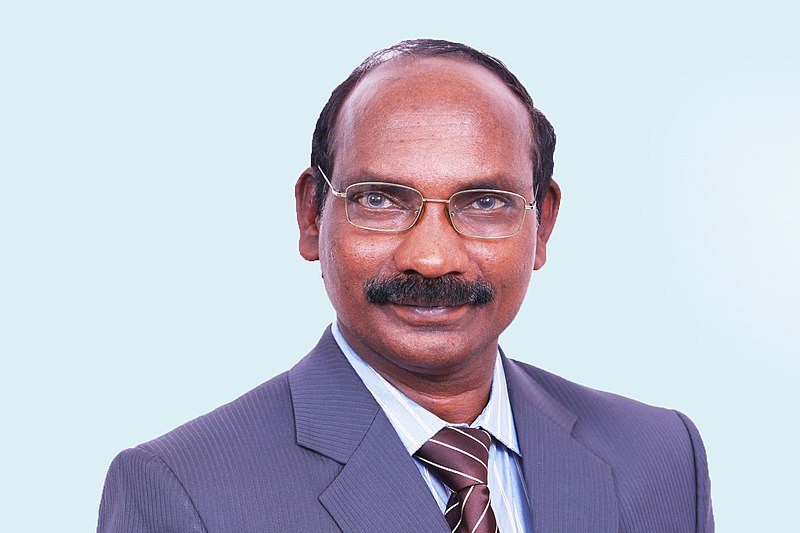
 K Sivan
Chandrayaan-3: Waited for 4 years, this success is sweet news, says ex-ISRO chief K Sivan
New Delhi: With the successful soft landing of Chandrayaan-3 near the lunar south pole, India has become the first nation to achieve this milestone, bringing a feeling of joy that ISRO has waited for the past four years, according to former ISRO chief K Sivan.
"We are really excited to see this grand success. For this, we have been waiting for the last four years. This success is sweet news for us and for the entire nation," Sivan was quoted as saying by ANI.
Sivan was the ISRO chief during the Chandrayaan-2 mission launch in 2019. The second lunar mission suffered setbacks when its lander lost contact, resulting in a hard landing.
The spacecraft was launched on July 14 from the Satish Dhawan Space Centre in Sriharikota, Andhra Pradesh, using a GSLV Mark 3 (LVM 3) heavy-lift launch vehicle. After being placed in lunar orbit on August 5, the spacecraft underwent a series of orbital adjustments to gradually approach the moon's surface.
As Chandrayaan-3's lander safely touched down on the Moon, ISRO's current chief S Somanath exclaimed, "India is on the Moon."
Sivan expressed gratitude for the government's support and highlighted that the mission's scientific data will benefit researchers worldwide, ANI reported.
As the Vikram lander, with the Pragyaan rover inside, touched down on the lunar surface, India became only the fourth country – after the US, China, and Russia – to have successfully landed on the moon's surface, and earned the record of landing first on the south side of Earth's only natural satellite.
The entire landing, which lasted for nearly 20 minutes, was watched by Indians with bated breath, especially as Russia’s Luna-25 failed to make the landing in the same region just days before. Prime Minister Narendra Modi watched the landing from South Africa’s Johannesburg, where he is attending the 15th BRICS Summit.
Four years ago, India's second lunar mission encountered a setback when its lander lost contact just 2.1 km away from the lunar surface, resulting in a hard landing. The then ISRO chief, K Sivan had broken into tears at the setback and the picture of Prime Minister Narendra Modi hugging him in consolation had gone viral.
The entire nation had commended ISRO's efforts and encouraged the space organisation to go on with its future endavours.
In a great show of perseverance, after years of toil and hard work, ISRO’s Chandrayaan-3 lander module, named Vikram, achieved a secure and soft landing on the Moon.
ISRO chief S Somanath celebrated the achievement by declaring, "India is on the Moon."
Expressing his gratitude for the support of the Central government, Sivan stated that the success of Chandrayaan-3 is a moment of joy and pride for everyone.
He also highlighted the global significance of the mission's scientific data, which will benefit researchers worldwide.
"The scientists will use this data globally to discover new things from it," he was quoted as saying by ANI.
ISRO used a series of close-up images of the moon to aid the lander module in pinpointing its location (latitude and longitude) by comparing them with an onboard moon reference map.
In the past, lunar missions have focused on the equatorial region due to its favourable conditions and terrain. However, the lunar south pole poses unique challenges due to its distinct and more complex landscape.
Support Our Journalism
We cannot do without you.. your contribution supports unbiased journalism
IBNS is not driven by any ism- not wokeism, not racism, not skewed secularism, not hyper right-wing or left liberal ideals, nor by any hardline religious beliefs or hyper nationalism. We want to serve you good old objective news, as they are. We do not judge or preach. We let people decide for themselves. We only try to present factual and well-sourced news.
Support objective journalism for a small contribution.


