 COVID19
Children have ‘nowhere to turn’, as COVID-19 hits protection, social services, reports UNICEF
New York: Disruptions to services for preventing and responding to violence in the home , due to the global pandemic, has left children in more than 100 countries vulnerable to exploitation and abuse, a UN Children’s Fund (UNICEF) survey has found.
The UN agency’s 'Socio-economic Impact Survey of COVID-19 Response' revealed that 104 countries out of 136 responding, reported interruptions or suspensions of services such as case management, referral services and home visits by child welfare and social workers, to children and women at risk of abuse.
Violence prevention programmes, children’s access to child welfare authorities, and national helpline services have also been affected, as countries adopted measures to prevent and contain COVID-19, according to UNICEF.
“We are just beginning to fully understand the damage done to children because of their increased exposure to violence during pandemic lockdowns”, said Henrietta Fore, UNICEF Executive Director, in a news release on Tuesday.
“Ongoing school closures and movement restrictions have left some children stuck at home with increasingly stressed abusers. The subsequent impact on protection services and social workers means children have nowhere to turn for help.”
The survey showed that around two-thirds of countries had at least one service severely affected, including South Africa, Malaysia, Nigeria and Pakistan - with South Asia, Eastern Europe and Central Asia, having the highest proportion of countries reporting disruptions in service availability.
Widespread exposure to violence, even before coronavirus
According to UNICEF, even before the pandemic, children’s exposure to violence was widespread, with about half of the world’s children experiencing corporal punishment at home. Roughly three in four children aged two to four, regularly subjected to forms of violent discipline, and one in three adolescent girls 15 to 19, having been victimised by their intimate partner at some point in their lives.
Furthermore, during COVID-19, limited contact with informal support networks such as friends, teachers, childcare workers, extended family and community members have left children and families more vulnerable.
The global pandemic has both made the problem worse and tied the hands of those meant to protect those at risk – UNICEF head Henrietta Fore
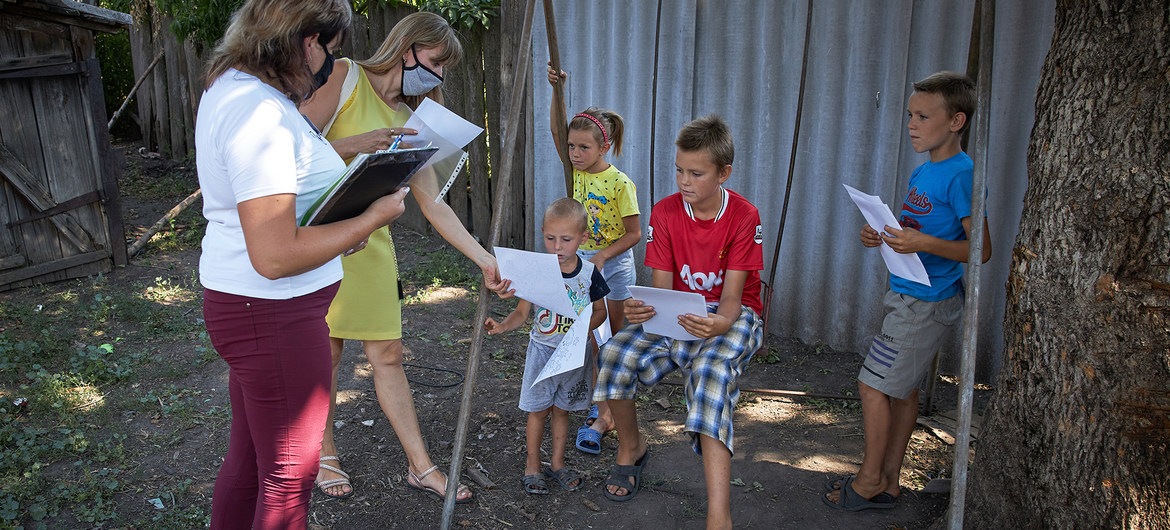
In response, UNICEF is supporting governments and partner organisations to maintain and adapt critical prevention and response services for children affected by violence during the pandemic. For instance, in Bangladesh, UNICEF has provided personal hygiene items including masks, hand sanitizers and eye protectors for social service workers to safely support children living on the streets, in slums, and in climate-affected and hard-to-reach areas, as well as recruiting and training additional social workers for the national child helpline.
“Child protection systems were already struggling to prevent and respond to violence against children, and now a global pandemic has both made the problem worse and tied the hands of those meant to protect those at risk,” added Ms. Fore.
“In times of crisis, governments must have immediate and long-term measures that protect children from violence, including designating and investing in social service workers as essential, strengthening child helplines and making positive parenting resources available,” she urged.
Support Our Journalism
We cannot do without you.. your contribution supports unbiased journalism
IBNS is not driven by any ism- not wokeism, not racism, not skewed secularism, not hyper right-wing or left liberal ideals, nor by any hardline religious beliefs or hyper nationalism. We want to serve you good old objective news, as they are. We do not judge or preach. We let people decide for themselves. We only try to present factual and well-sourced news.
Support objective journalism for a small contribution.