


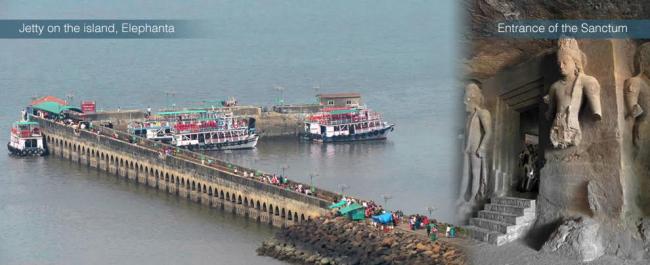
Climate change a long-term threat to heritage sites including Elephanta Caves
Climate change is fast becoming one of the most significant risks for World Heritage sites, according to the report "World Heritage and Tourism in a Changing Climate" released on May 26.
"Globally, we need to better understand, monitor and address climate change threats to World Heritage sites," said Mechtild Rössler, Director of UNESCO's World Heritage Center. "As the report's findings underscore, achieving the Paris Agreement's goal of limiting global temperature rise to a level well below 2 degrees Celsius is vitally important to protecting our World Heritage for current and future generations."
The new report lists 31 natural and cultural World Heritage sites in 29 countries that are vulnerable to increasing temperatures, melting glaciers, rising seas, intensifying weather events, worsening droughts and longer wildfire seasons. It documents climate impacts at iconic tourism sites - including Venice, Stonehenge and the Galapagos Islands - and other World Heritage sites such as South Africa's Cape Floral Kingdom; the port city of Cartagena, Colombia; and Shiretoko National Park in Japan.
"Climate change is affecting World Heritage sites across the globe," said Adam Markham, lead author of the report and Deputy Director of the Climate and Energy Program at UCS. "Some Easter Island statues are at risk of being lost to the sea because of coastal erosion. Many of the world's most important coral reefs, including in the islands of New Caledonia in the western Pacific, have suffered unprecedented coral bleaching linked to climate change this year. Climate change could eventually even cause some World Heritage sites to lose their status."
"World governments, the private sector and tourists all need to coordinate their efforts to reduce carbon emissions and to protect the world's most treasured cultural and natural resources from the impact of tourism activities" said Elisa Tonda, UNEP's head of the Responsible Industry and Value Chains Unit.
"Policies to decouple tourism from natural resource impacts, carbon emissions and environmental harm will engage a responsible private sector and promote change in tourists' behaviour to realise the sectors' potential in some of the world's most visited places."
Because World Heritage sites must have "Outstanding Universal Value," the report recommends that the World Heritage Committee consider the risk of prospective sites become degraded by climate change before they add them to the list.
Image: Maharashtra Tourism Facebook
Support Our Journalism
We cannot do without you.. your contribution supports unbiased journalism
IBNS is not driven by any ism- not wokeism, not racism, not skewed secularism, not hyper right-wing or left liberal ideals, nor by any hardline religious beliefs or hyper nationalism. We want to serve you good old objective news, as they are. We do not judge or preach. We let people decide for themselves. We only try to present factual and well-sourced news.
Support objective journalism for a small contribution.


