


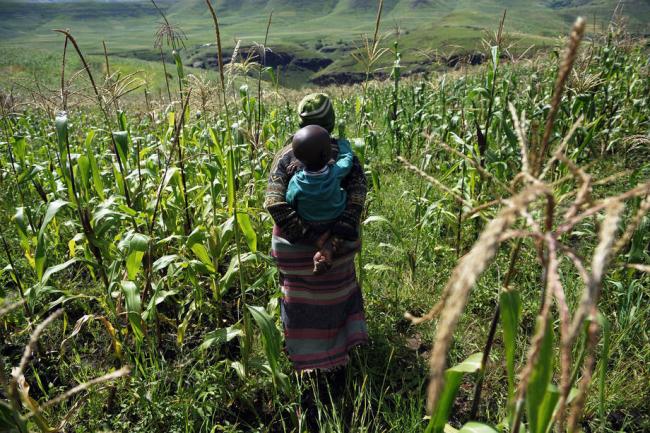
Climate outlook 'particularly concerning' in southern Africa due to El Nino - UN agency
The agency found that short-term forecasts from January to March indicate the high probability of continuing below-normal rainfall in the south, signaling that this could become one of the worst droughts on record.
“The current growing season, which spans from October 2015 to April 2016, is developing under the peak of the El Niño, with the first phase of the growing season characterized by severe and widespread rainfall deficits,” the situation report highlights.
“El Niño’s impact on rain-fed agriculture is severe. Poor rainfall, combined with excessive temperatures, create conditions not conducive for crop growth,” it adds.
Although El Niño’s impact on people’s livelihood reportedly varies according to preparedness and response capacities, rain-dependent small holder farmers—comprising at least 50 per cent of the population in Southern Africa—are the hardest hit.
In Lesotho, Swaziland, Zambia and Zimbabwe, WFP is highlighting that delayed planting of up to two months or more, severely impacts maize yields. “As the window for planting closes, even good rainfall offers limited scope for recovery,” it warned.
In conclusion, the UN food agency underscored that the climate outlook is particularly concerning as it is coming on top of a poor harvest in 2014 and 2015.
“Poor regional cereal harvests from the 2014-2015 season have tightened cereal supplies. On average, harvests were 21 per cent lower than the 2013-2014 season and 3 per cent lower than the five-year average. In total, the cereal deficit for the region is 7.9 million tonnes for the 2015/2016 marketing year,” WFP noted.
Photo: FAO/Gianluigi Guercia
Support Our Journalism
We cannot do without you.. your contribution supports unbiased journalism
IBNS is not driven by any ism- not wokeism, not racism, not skewed secularism, not hyper right-wing or left liberal ideals, nor by any hardline religious beliefs or hyper nationalism. We want to serve you good old objective news, as they are. We do not judge or preach. We let people decide for themselves. We only try to present factual and well-sourced news.
Support objective journalism for a small contribution.


