


 Pandemics
Community-led responses ‘essential for ending pandemics’ – UNAIDS
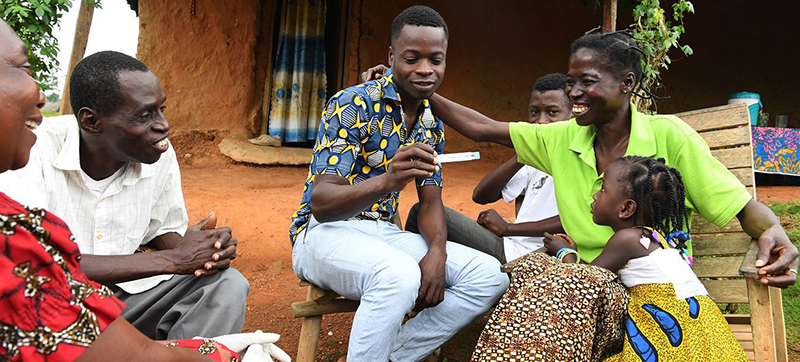
New York: Communities must be empowered and appropriately resourced to lead the fight against HIV/AIDS and other pandemics, UNAIDS, the UN agency dedicated to tackling HIV/AIDS, stressed at an international meeting held in Thailand.
“To be effective, pandemic responses need to move beyond one-way communications to bring communities into decision making at all levels”, said Matthew Kavanagh, UNAIDS Deputy Executive a.i for Policy, Advocacy and Knowledge.
“Community leadership is not a mere nice-to-have. It is essential for ending pandemics”.
Step in the right direction
In a positive step forward, the first international definition of “community-led response” was presented – along with other outcomes of a UNAIDS task team – to the 51st Programme Coordinating Board meeting of the UN Joint Programme on HIV and AIDS.
The development carries potential significance, as humanitarians and health experts believe that the best way to grapple with disease outbreaks is by working with communities. The new definition of community-led response will help to build and monitor capacity at a local level.
“We will only be able to end AIDS and stop other pandemics by ensuring that this community infrastructure is intentionally enabled, strengthened, monitored, and resourced”, argued Mr. Kavanagh.
Pandemic template
Delegates from the UNAIDS task team on community-led responses – co-convened in Chiang Mai, Thailand, by the World Health Organization (WHO) and UN Development Programme (UNDP) – maintained that the approach set out by UN agencies, governments and others would be key in both tackling other pandemics and preparing for those to come.
“Stopping COVID-19, mpox [monkeypox], and Ebola, and preparing for the next pandemic, all require that partnership of government and community together”, continued the UNAIDS official.
Protect neglected elements
Using the new definitions and recommendations, UNAIDS chief Winnie Byanyima and German Federal Health Minister Karl Lauterbach published an article in The Lancet calling for the inclusion of comprehensive “community pandemic infrastructure” in new planning, international agreements, and financing.
The leaders upheld that strong community infrastructure and working synergistically with governments, is a necessary but neglected element of pandemic prevention, preparedness, and response.
Using evidence from AIDS, mpox, COVID-19, and Ebola, the authors described how community-led organizations bring trust, communications channels, and reach to marginalized groups, complementing government roles, and improving equity.
Unleashing progress
The UNAIDS Board meeting also held dialogues between member States and non-State participants on developing laws and policies to facilitate community-led response – including better systems for financing community-led organizations and integrating community-generated data into response management.
“The newly agreed framework for defining and measuring community-led responses make us better equipped to address the inequalities that are holding back progress in ending AIDS”, underscored Mr. Kavanagh.
The delegates saw firsthand how key-population-led health services have reached people at risk of HIV, achieving among the most equitable HIV responses in the region.
For example, amid the war in Ukraine, a network of people living with HIV, called 100 per cent Life, has used peer links to communicate with those displaced, delivering medicines, food, and emergency assistance.
Integrate responses
To end the AIDS pandemic, community responses must be integrated into all levels of country strategies from planning, to budgeting and implementation, and monitoring and evaluation.
“While what is most often understood as infrastructure – like labs and hospitals – are important, also essential to effective pandemic response is the community infrastructure which includes people to do outreach, trusted voices who can speak to excluded communities, independent accountability mechanisms, and participation in decision-making”, said Mr. Kavanagh.
“International pandemic agreements and funding should include specific goals for community-led capacity”.
Support Our Journalism
We cannot do without you.. your contribution supports unbiased journalism
IBNS is not driven by any ism- not wokeism, not racism, not skewed secularism, not hyper right-wing or left liberal ideals, nor by any hardline religious beliefs or hyper nationalism. We want to serve you good old objective news, as they are. We do not judge or preach. We let people decide for themselves. We only try to present factual and well-sourced news.
Support objective journalism for a small contribution.


