


 Gaganyaan
Countdown for Gaganyaan's first unmanned flight test to begin tomorrow morning
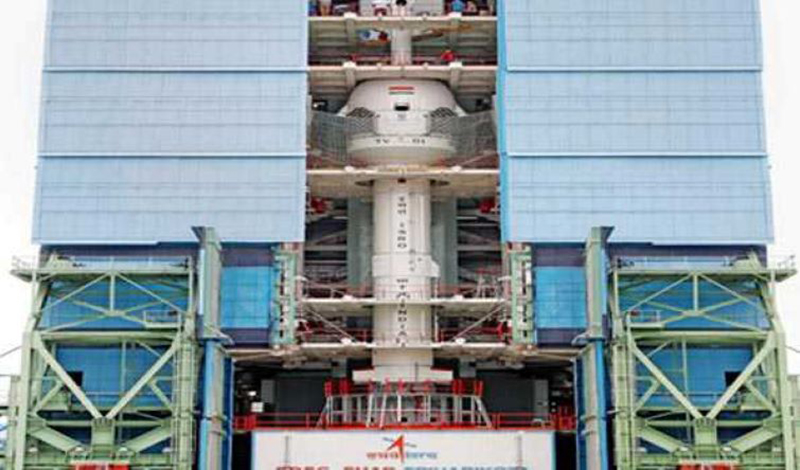
Chennai/IBNS/UNI: The 24-hour countdown for the first unmanned Flight Test Vehicle Abort Mission-1 (TV-D1) to demonstrate the crew escape system of the Gaganyaan programme, will begin at 8.00 a.m. at SHAR Range, Sriharikota on Friday.
The launch of the short-duration mission will take place from the First Launch Pad at 0800 hrs on Saturday morning and the entire mission will last 531 secs (about nine minutes).
This flight test will mark a major milestone in the overall Gaganyaan programme--which will be India's first manned mission to space--and will define the in-flight abort demonstration of the Crew Escape System (CES) at Mach Number 1.2 with the newly developed Test Vehicle followed by Crew Module Separation and Recovery.
The objective of the mission is flight demonstration and evaluation of test vehicle sub-systems, Crew Escape System including various separation systems, and Crew Module characteristics & deceleration systems demonstration at higher altitudes and their recovery.
The 35 m tall Liquid Propelled Single StageTest Vehicle, weighing about 44 tons, uses a modified Vikas engine with a 4,520 kg Crew Module (CM) and CES mounted at its fore end.
"The entire flight sequence, right from lift off from the First Launch Pad to the crew module touchdown at sea about 10 km from Sriharikota, with the deployment of parachutes, will last 531 seconds," ISRO said.
The CM is a single-walled unpressurised aluminium structure. It said about 60 seconds after the lift, the test vehicle -- crew escape the system will get separated at an altitude of 11.7 km and 30 seconds later, the CM-CES will get separated at an altitude of 16.7 km at a velocity of 148.7 m/s.
Subsequently, the abort sequence will be executed autonomously commencing with the separation of CES and deployment of a series of parachutes, finally culminating in the safe touchdown of the CM in the sea, about 10 km from the coast of Sriharikota, the space agency said.
Support Our Journalism
We cannot do without you.. your contribution supports unbiased journalism
IBNS is not driven by any ism- not wokeism, not racism, not skewed secularism, not hyper right-wing or left liberal ideals, nor by any hardline religious beliefs or hyper nationalism. We want to serve you good old objective news, as they are. We do not judge or preach. We let people decide for themselves. We only try to present factual and well-sourced news.
Support objective journalism for a small contribution.


