


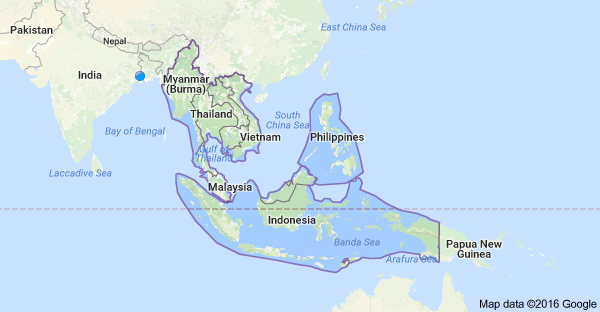
Countries in South-East Asia pledge action against noncommunicable diseases
“This is a critical moment for health systems and the people they serve across the South-East Asia Region. Noncommunicable diseases (NCDs) are already taking an unacceptable toll on populations, with the burden projected to rise in coming years. To avert this possibility, services for these diseases must be made available at the primary health care level, and high-risk populations must be provided all opportunities to access screening and treatment,” Poonam Khetrapal Singh, Regional Director for WHO South-East Asia, said.
The members expressed serious concern at the unacceptable burden of noncommunicable diseases, including cardiovascular diseases, cancers, diabetes and chronic respiratory diseases.
As part of the declaration health ministers pledged to undertake targeted screening for early diagnosis, as well as to increase health guidance and counselling to promote healthy choices and self-care.
Ensuring appropriate treatment, robust follow-up, management of referrals and focusing on and expanding NCD services to the high-risk population are key parts of the declaration.
“This is an important opportunity to reaffirm commitment to the global goal of reducing NCD-related premature mortality by one-third by 2030, and to actually map-out how we will get there. Implementing effective policy solutions is vital to addressing the personal and social tragedy caused by NCDs, as well as their impact on economic development,” said Khetrapal Singh.
To fund the primary health care approach for addressing NCDs, which is foundational to the declaration, health ministers committed themselves to advocating for innovative financing methods, including dedicated taxation of health damaging commodities such as tobacco, alcohol and unhealthy foods and beverages.
This will both reduce exposure to NCD risk factors as well as mobilize more resources for NCD prevention and control.
The ‘Colombo Declaration’ was adopted on the opening day of the five-day Sixty-ninth WHO Regional Committee Meeting, which was inaugurated here this morning by Prime Minister of Sri Lanka Ranil Wickremesinghe, in the presence of Margaret Chan, Director-General WHO, and health ministers and senior health ministry officials of the 11 member countries of the Region - Bangladesh, Bhutan, Democratic People’s Republic of Korea, India, Indonesia, Maldives, Myanmar, Nepal, Sri Lanka, Thailand and Timor-Leste.
Image: Google maps
Support Our Journalism
We cannot do without you.. your contribution supports unbiased journalism
IBNS is not driven by any ism- not wokeism, not racism, not skewed secularism, not hyper right-wing or left liberal ideals, nor by any hardline religious beliefs or hyper nationalism. We want to serve you good old objective news, as they are. We do not judge or preach. We let people decide for themselves. We only try to present factual and well-sourced news.
Support objective journalism for a small contribution.


