


 Cicada
COVID isn’t over: New BA.3.2 variant spreads across US with shocking mutations
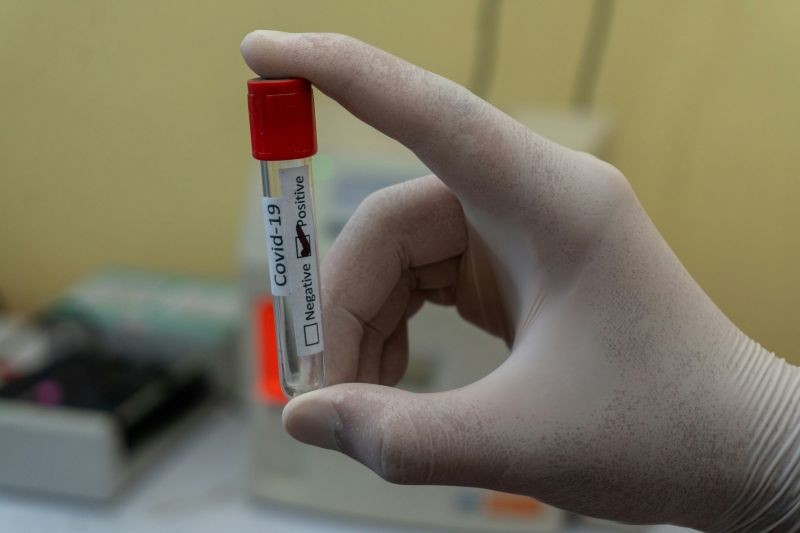
A heavily mutated new COVID-19 variant, BA.3.2 — informally dubbed “Cicada” — is spreading across the United States, according to media reports.
According to reports, the variant has a stronger chance of escaping immunity from vaccines or prior infection.
At present, COVID-19 cases remain low in the US, but BA.3.2 has now been detected across several nations, including the US.
The U.S. Centers for Disease Control and Prevention said as of February 11, 2026, BA.3.2 had been reported in 23 countries.
"Detections began increasing in September 2025. In the United States, BA.3.2 was detected in nasal swabs from four travelers, three airplane wastewater samples, clinical samples from five patients, and 132 wastewater samples from 25 U.S. states," US Centers for Disease Control and Prevention said.
It further said: "Monitoring the spread of BA.3.2 provides valuable information about the potential for this new SARS-CoV-2 lineage to evade immunity from a previous infection or vaccination."
Andrew Pekosz, Ph.D., a virologist at the Johns Hopkins Bloomberg School of Public Health, told TODAY.com, "Perhaps more concerning is the variant's slew of genetic changes in its spike protein, which set it apart from other variants circulating."
“It has a lot of mutations that may cause it to look different to your immune system,” Pekosz says.
Why is the variant named Cicada?
BA.3.2 was nicknamed “cicada” by T. Ryan Gregory, Ph.D., a professor of evolutionary biology at the University of Guelph who's coined other variant names like “stratus” and “pirola.”
Like its namesake insect, BA.3.2 also spent its first few years “underground” before re-emerging as a potential major variant, Gregory tells TODAY.com.
Does the variant cause more serious illness?
Dr. Adolfo García-Sastre, director of the global health and emerging pathogens institute at Mt. Sinai told TODAY.com, "There’s no evidence that BA.3.2 is causing more severe disease or hospitalizations in countries where it’s more widespread."
"It can still cause problems, of course, but it's not a more problematic strain that previous ones," says García-Sastre.
The World Health Organisation said BA.3.2 has not shown a sustained growth advantage over any other cocirculating variant, and no data indicate increased severity, hospitalisations, or deaths associated with this variant.
"Overall, available evidence suggests that BA.3.2 poses low additional public health risk compared with other circulating Omicron descendent lineages," the world health body said.
Support Our Journalism
We cannot do without you.. your contribution supports unbiased journalism
IBNS is not driven by any ism- not wokeism, not racism, not skewed secularism, not hyper right-wing or left liberal ideals, nor by any hardline religious beliefs or hyper nationalism. We want to serve you good old objective news, as they are. We do not judge or preach. We let people decide for themselves. We only try to present factual and well-sourced news.
Support objective journalism for a small contribution.


