


Dementia patients with distorted memories may actually retain key information - study
London, Mar 7 (IBNS): Some memories containing inaccurate information can be beneficial to dementia sufferers because it enables them to retain key information, according to a new study.
The University of Birmingham researchers suggest that distorted memories play a role in preserving knowledge for someone with dementia and that the role they play should be evaluated.
The findings published in the journal Mind & Language, suggests that it might be better not to challenge the distorted beliefs of someone with dementia.
Research already suggests that some memory distortions make people feel better about themselves, especially when the memory presents them as more talented or independent than they actually are.
But, in the study, Professor Lisa Bortolotti and Dr Ema Sullivan-Bissett suggest that memory distortions help people preserve important information about themselves that would otherwise be lost.
Professor Lisa Bortolotti, University of Birmingham said: “Imagine that an elderly woman with Alzheimer’s disease tells you that in the morning she was walking on the beach with her parents. Actually, her parents died long ago and she did walk on the beach with them, but not this morning, rather sixty years ago, when she was a young woman.
“Should we challenge her report? If we do not confront her, she will feel more confident and we avoid creating additional stress for her, but we go along with her distorted picture of reality where her parents are still alive.
“If we do confront her, we correct her mistaken representation of reality, but the challenge is likely to cause her stress and make her feel insecure, and as a result of this she may be unwilling to share information with others in the future.”
The researchers suggest that these sorts of distorted memories in people with dementia may contribute to both their well-being and their knowledge.
Dr Ema Sullivan-Bissett, University of Birmingham explains: “The woman who remembers walking on the beach with her parents retains some key information about herself by reporting the memory that she lived near the sea, that her parents loved spending time with her, and so on.
“Because she lacks autobiographical information and her memory is going to get worse, it may not be possible for her to correct the distorted memory and gain true beliefs about her parents and herself from an external challenge.”
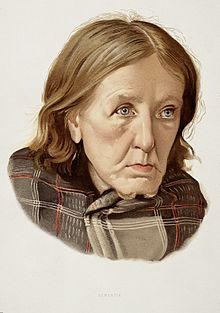
Image: Wikimedia Commons
Support Our Journalism
We cannot do without you.. your contribution supports unbiased journalism
IBNS is not driven by any ism- not wokeism, not racism, not skewed secularism, not hyper right-wing or left liberal ideals, nor by any hardline religious beliefs or hyper nationalism. We want to serve you good old objective news, as they are. We do not judge or preach. We let people decide for themselves. We only try to present factual and well-sourced news.
Support objective journalism for a small contribution.


