


Ebola: UN says experimental vaccine trials in West Africa could begin by January
The UN World Health organization (WHO) also said “evidence is mounting that earlier messages about Ebola virus disease having no treatment, cure, or vaccines are no longer entirely accurate.”
WHO cited a number of candidate vaccines were undergoing clinical trials as well as the first clinical trials of therapeutic – possibly curative – transfusions of whole blood or blood plasma from recovered patients that are scheduled to begin soon in Liberia, in line with WHO technical guidelines.
At the end of a three-day visit to Sierra Leone, WFP Executive Director Ertharin Cousin on Thursday called upon partners all over the world to work together to address the critical needs of those affected by the health crisis.
In support of a unified efforts being carried out by the UN Mission for Ebola Emergency Response (UNMEER), WFP has to date provided food assistance to 1.3 million people and is ramping up services to the whole humanitarian effort in Guinea, Liberia and Sierra Leone.
“What I have learned in Sierra Leone is that the international community has made a lot of progress in meeting the needs of the victims of this crisis,” Cousin said. “But we all have more work to do. We need to scale up, we need to get better, we need to perform faster.”
“We need to ensure that everyone joins together on Thursday to make the difference that is required to stop the spread of this deadly disease,” she said.
Cousin also praised the courageous men and women battling the disease on the front lines.
“What we don’t hear about are the stories of the men and women who have worked to address the challenges of the crisis,” she said, “They are the evidence that we can win this battle.”
In Geneva on Thursday, WHO welcomed approval by Swissmedic, the Swiss regulatory authority for therapeutic products, for a second Swiss trial with an experimental Ebola vaccine.
“The trial will be led by the University Hospitals of Geneva,” WHO said in a press release. “If judged safe, larger scale trials will be taken to African countries as early as January 2015.”
The experimental vaccine will be tested on healthy volunteers, some of whom will be deployed as health care staff in the fight against the Ebola epidemic in West Africa, according to WHO.
“These trials show an almost unprecedented mobilization on the part of countries, health agencies and industry to pitch in and help to curb the Ebola epidemic,” said Dr. Marie-Paule Kieny, WHO’s Assistant Director-General for Health Systems and Innovation. “If the vaccines prove to be safe and effective and we move to production and distribution scale-up, this will be the fastest vaccine roll-out we have had in response to a public health emergency to date.”
WHO also said its study published in the New England Journal of Medicine, provides evidence that supportive care, especially rehydration and correction of metabolic abnormalities, may contribute to patient survival.
The study analyzed clinical data on 37 confirmed Ebola patients admitted for treatment at hospitals in Conakry, Guinea’s capital and most densely populated city.
One of the strongest determinants of survival appears to be patient age, WHO said. Patients older than 40 years were nearly 3.5 times more likely to die than those aged less than 40.
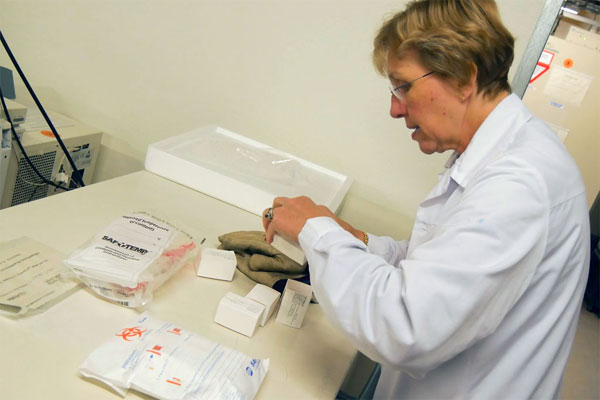
Clinical trials of this candidate Ebola vaccine will take place in the US, Germany, Gabon and Kenya. Photo: WHO/M. Missioneiro
Support Our Journalism
We cannot do without you.. your contribution supports unbiased journalism
IBNS is not driven by any ism- not wokeism, not racism, not skewed secularism, not hyper right-wing or left liberal ideals, nor by any hardline religious beliefs or hyper nationalism. We want to serve you good old objective news, as they are. We do not judge or preach. We let people decide for themselves. We only try to present factual and well-sourced news.
Support objective journalism for a small contribution.


