


Fight against malaria must be taken to 'next level', UN agency urges ahead of World Day
In a press release issued two days ahead of this year’s global observance of World Malaria Day, the World Health Organization (WHO), warned that despite “dramatic declines” in malaria cases and deaths since 2000, more than half a million lives are still lost to what is widely understood to be a preventable disease.
“As we celebrate World Malaria Day on 25 April, we must recognize the urgent need to expand prevention measures and quality-assured diagnostic testing and treatment to reduce the human suffering caused by malaria,” said Dr. Hiroki Nakatani, the WHO Assistant Director-General for HIV/AIDS, Tuberculosis, Malaria and Neglected Tropical Diseases.
According to the latest WHO report on the issue, malaria mortality rates have decreased by 47 per cent worldwide and 54 per cent in Africa alone since 2000. Since 2001, it is estimated that more than 4 million malaria-related deaths have been averted, approximately 97 per cent of which have been children under five.
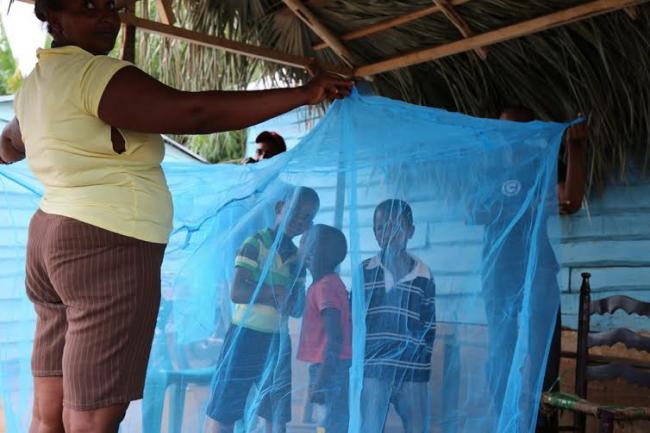
Nevertheless, at least three quarters of malaria deaths continue to occur in children under five while only one in five African children with malaria received effective treatment for the disease. At the same time, 15 million pregnant women did not receive a single dose of the recommended preventive drugs and an estimated 278 million people in Africa still live in households without a single insecticide-treated bed net, according to the UN agency.
“We must take the malaria fight to the next level,” declared Dr. Pedro Alonso, Director of the WHO Global Malaria Programme. “Moving towards elimination will require high-level political commitment and robust financing, including substantial new investments in disease surveillance, health systems strengthening and research.”
WHO acknowledged that increased political commitment and greater funding had, in fact already averted more than 4 million malaria deaths since 2001.
But, it added, a new global malaria strategy developed by the UN would now call for a reduction of the disease’s burden by at least 90 per cent over the next 15 years and provide a comprehensive framework for countries to develop tailored programmes aimed at accelerating progress towards malaria elimination.
Just this week, the UN-supported Roll Back Malaria Partnership spotlighted the $100 billion price tag required to eliminate the mosquito-borne disease by 2030, noting that the investment would carry “a significant return”: a potential 12 million lives saved, nearly 3 billion cases averted globally and a global gain of $270 billion if the disease is eradicated in sub-Saharan Africa alone.
Photo: WHO/PAHO
Support Our Journalism
We cannot do without you.. your contribution supports unbiased journalism
IBNS is not driven by any ism- not wokeism, not racism, not skewed secularism, not hyper right-wing or left liberal ideals, nor by any hardline religious beliefs or hyper nationalism. We want to serve you good old objective news, as they are. We do not judge or preach. We let people decide for themselves. We only try to present factual and well-sourced news.
Support objective journalism for a small contribution.


