


‘Floating Terrors’ wash ashore! Urgent warning for beachgoers in UK's Wales
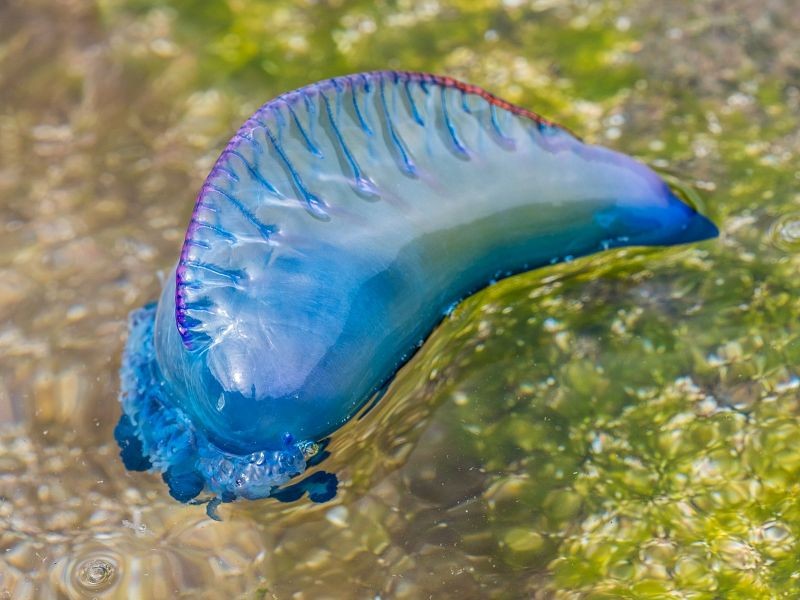
Authorities have issued an urgent safety warning after several Portuguese Man O’ War, also known as “Floating Terrors,” washed up on a popular Welsh beach in the UK, posing a danger to the public.
The Port Talbot Coastguard has urged visitors to avoid touching the creatures, which were spotted along Aberavon Beach in recent days.
Similar sightings have also been reported across Pembrokeshire, Gwynedd, and Anglesey, according to Express.co.uk.
“Even after death, the tentacles can still deliver a painful sting,” the Coast Guard told the media, confirming that teams are working to safely remove the venomous creatures from the sand.
Often mistaken for jellyfish, the Portuguese Man O’ War is actually a siphonophore, which is a floating colony of tiny, genetically identical organisms that function together as one.
Their striking purple-blue floats and trailing tentacles conceal a powerful venom capable of causing severe pain, blisters, fever, and even respiratory distress.
In rare cases, their sting can trigger life-threatening allergic reactions.
Even detached tentacles remain active for hours or days, capable of delivering painful shocks to unsuspecting beachgoers.
Safety advice for public
The Coastguard has urged people to stay alert and follow these precautions:
- Do not touch the creatures, even if they appear dead.
- Rinse with seawater (not freshwater) if stung.
- Gently remove tentacles using a credit card or similar object.
- Immerse the area in hot water and seek medical help immediately if symptoms worsen.
What is a Portuguese Man O’ War?
According to the Wildlife Trusts, the Portuguese Man O’ War (scientific name Physalia physalis) is known for its translucent purple float topped with a pink crest and long blue tentacles that can stretch up to 30 metres (98 feet).
Unlike jellyfish, the Man O’ War cannot swim. It drifts with ocean currents and winds, often washing ashore after storms or rough seas.
Its venom-filled tentacles are designed to paralyse and kill small fish and crustaceans, but accidental contact with humans can cause intense burning pain described by experts as one of the worst marine stings.
Local coastguards have stepped up beach patrols along the Welsh coastline to monitor further sightings.
“Public safety is our top priority,” officials said. “Anyone who spots a Portuguese Man O’ War should report it immediately and keep children and pets away.”
Support Our Journalism
We cannot do without you.. your contribution supports unbiased journalism
IBNS is not driven by any ism- not wokeism, not racism, not skewed secularism, not hyper right-wing or left liberal ideals, nor by any hardline religious beliefs or hyper nationalism. We want to serve you good old objective news, as they are. We do not judge or preach. We let people decide for themselves. We only try to present factual and well-sourced news.
Support objective journalism for a small contribution.


