


Four in five adolescents failing to exercise for even 60 minutes a day, UN health agency warns
New York/IBNS: An alarming lack of exercise among adolescents across the world risks seriously compromising their health into adulthood, the UN said on Thursday.
In the first study of its kind on global and regional trends among 11 to 17-year-olds, the World Health Organization (WHO) said that around 80 per cent of them do less than 60 minutes of activity per day – the minimum daily recommendation.
Philippines boys and South Korean girls ‘least active’
According to the study, the Philippines had the highest inactivity levels among boys, at 93 per cent, while in South Korea, researchers found that 97 per cent of girls failed to do enough exercise.
In gender terms on average, 85 per of girls failed to do enough globally, only slightly worse than boys (78 per cent).
“From 2001 to 2016 we found that there’s been no improvement in patterns of activity in this age group…one hour out of their lives each day to be physically active and to get a health benefit from being physically active,” said the WHO study co-author Dr. Leanne Riley. “That can be made up of different small chunks of their time, anything that adds up to 60 minutes.”
No need to push it to get health benefits
Insisting that physical activity needn’t be overly strenuous or vigorous for it to be beneficial, Dr. Riley explained that jogging, walking, cycling or “just trying to be active” can all make a positive difference.
In the long-term, failing to do enough exercise leaves people vulnerable to a range of non-communicable and preventable illnesses, WHO has repeatedly warned.
These non-communicable diseases include heart disease, high blood pressure, diabetes, breast and colon cancer.
Healthier body – and mind - from exercise
An additional benefit of physical activity is improved mental health, Dr. Riley insisted, highlighting that exercise also promotes learning, delays the onset of dementia and can help maintain a healthy weight.
“If they do it…they’re likely to be healthier adults too,” said the WHO study lead co-author Dr. Regina Guthold, insisting on the importance of establishing healthy habits early on.
According to the study of 1.6 million school-going students from 146 countries, girls were less active than boys in all but four of them: Tonga, Samoa, Afghanistan and Zambia.
The difference between the amount of exercise between boys and girls was greater than 10 per cent in almost a third of countries in 2016, and this trend became more pronounced in almost three-quarters of nations surveyed between 2001 and 2016.
Bangladesh, Singapore, Thailand - most improvements
The countries showing the most improvement in activity levels among boys were Bangladesh (from 73 per cent to 63 per cent), Singapore and Thailand (78 to 70), Benin (79 to 71) and the U.S. and Ireland (71 to 64).
In the case of the US, the study authors noted the likely positive impact of national sports promotion initiatives, although these appeared to have had more success with boys than girls, they said.
Among girls in general the changes in activity levels were small over the review period, the WHO study found, ranging from a twohttps://www.un.org/sustainabledevelopment/development-agenda/ per cent increase in Singapore – from 85 per cent to 83 per cent – to a one per cent increase in Afghanistan (87 per cent to 88 per cent).
Under the 2030 Global Goals Agenda for Sustainable Development adopted in 2015 by the international community, Governments agreed to a 15 per cent improvement in activity levels by 2030.
“We are off-track; this target will not be met if these trends continue,” Dr. Guthold insisted.
Photo caption and credit:
Unsplash/Paul Proshin
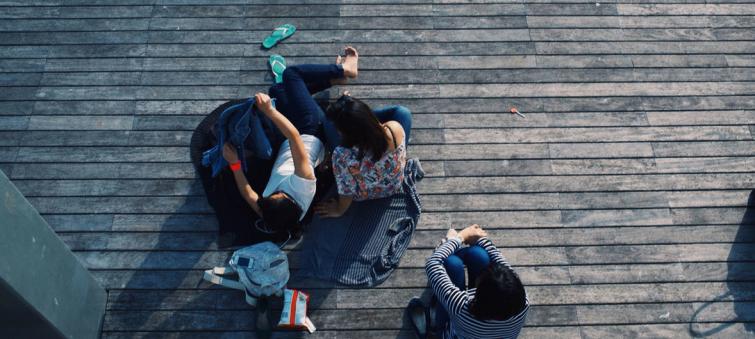
The UN health agency, WHO, is encouraging adolescents to exercise more.
Support Our Journalism
We cannot do without you.. your contribution supports unbiased journalism
IBNS is not driven by any ism- not wokeism, not racism, not skewed secularism, not hyper right-wing or left liberal ideals, nor by any hardline religious beliefs or hyper nationalism. We want to serve you good old objective news, as they are. We do not judge or preach. We let people decide for themselves. We only try to present factual and well-sourced news.
Support objective journalism for a small contribution.


