


Govt agencies, experts had warned of Sikkim’s glacial lake outburst
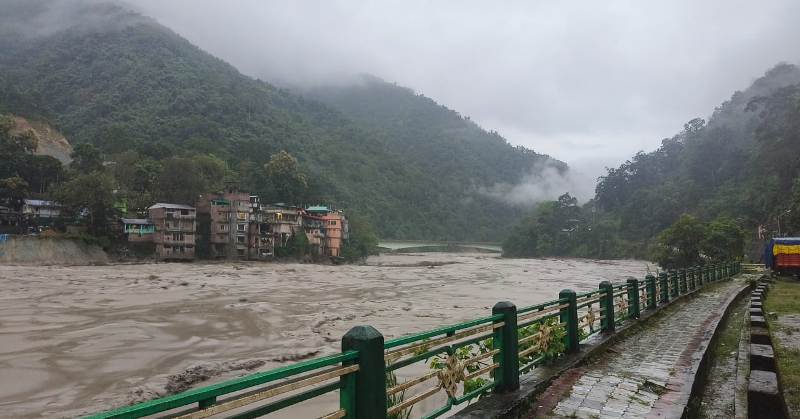
New Delhi: The flash floods in Sikkim, which claimed at least 14 lives and 102 others still missing, did not come without warnings, media reports said.
Over the past ten years, various government agencies and researchers have issued multiple warnings regarding the potential occurrence of devastating glacial lake outburst floods in Sikkim, according to an India Today report.
The most recent advisory about the Lhonak Lake in North Sikkim was issued in 2021, but unfortunately, all these cautionary signs went unheeded.
On Wednesday, a cloudburst over the lake triggered flash floods in the Teesta River basin, resulting in a catastrophe that affected 22,034 people.
South Lhonak Lake, located in Sikkim's far northwestern region, is one of 14 potentially dangerous lakes susceptible to GLOFs, say studies.
The glacial lake outburst flood (GLOF) on October 4 led to a rapid rise in water levels in Lake, causing severe damage in Mangan, Gangtok, Pakyong and Namchi districts.
Glacial lake outburst floods (GLOFs) occur when melting glacier-formed lakes burst open due to excessive water accumulation or triggers like earthquakes, causing destructive flash floods downstream.
The lake is situated at an altitude of 5,200 m (17,100 ft) above sea level and formed due to the melting of the Lhonak glacier. The lake's size is rapidly increasing due to the melting of the associated glaciers.
Satellite images confirmed a GLOF event, showing a drastic reduction in the lake's area from 167.4 hectares on September 28 to 60.3 hectares on October 4.
Support Our Journalism
We cannot do without you.. your contribution supports unbiased journalism
IBNS is not driven by any ism- not wokeism, not racism, not skewed secularism, not hyper right-wing or left liberal ideals, nor by any hardline religious beliefs or hyper nationalism. We want to serve you good old objective news, as they are. We do not judge or preach. We let people decide for themselves. We only try to present factual and well-sourced news.
Support objective journalism for a small contribution.


