


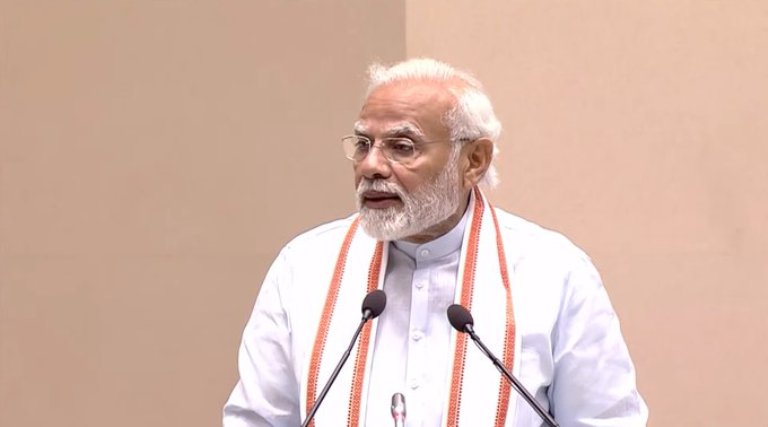
 PM Modi
India working on long term vision to protect environment: PM Modi
Kolkata/IBNS: On the occasion of the World Environment Day, Prime Minister Narendra Modi appreciated the ‘Save Soil Movement’, and said that at a time when the nation is taking new pledges during the Azadi ka Amrit Mahotsav, such movements acquire a new importance.
addressing a gathering to mark the occasion, PM Modi expressed satisfaction that key programmes of the last 8 years have an angle on environmental protection.
He cited the Swachh Bharat Mission or the waste to wealth-related programme, reduction of single-use plastic, one sun one earth or ethanol blending programme as examples of multi-dimensional efforts by India for the preservation of the environment.
The Prime Minister noted that India's efforts to protect the environment have been multifaceted.
"India is making this effort when India's role in climate change is negligible. Large modern countries of the world are not only exploiting more and more resources of the earth, but maximum carbon emission goes to their account," he said.
The Prime Minister said that the average carbon footprint of the world is about 4 ton per person per annum compared to just about 0.5 ton per person per annum in India.
He said that India is working on a long term vision in collaboration with the international community to protect the environment and established organizations like Coalition for Disaster Resilient Infrastructure, International Solar Alliance.
The Prime Minister reiterated India’s goal of Net-Zero by 2070.
He informed that to save the soil, "we have focused on five main things. First- How to make the soil chemical free. Second- How to save the organisms that live in the soil, which are called Soil Organic Matter in technical language. Third- How to maintain soil moisture, how to increase the availability of water till it.
"Fourth- How to remove the damage that is happening to the soil due to less groundwater. And fifth, how to stop the continuous erosion of soil due to the reduction of forests."
He said main efforts are being undertaken in the agriculture sector to alleviate the problem of soil issues.
The Prime Minister said earlier, that the farmers of our country lacked information about the type of soil, deficiency in the soil, and how much water is there.
"To overcome this problem, a huge campaign was launched to give soil health cards to the farmers in the country," he added.
The Prime Minister informed that the government is connecting the people of the country with water conservation through campaigns like catching the rain.
He noted that the policies related to biodiversity and wildlife that India is following today have also led to a record increase in the number of wildlife.
"Today whether it is tiger, lion, leopard or elephant, the number of all is increasing in the country," he added.
The Prime Minister noted, for the first time initiatives relating to swachhta, self-reliance on fuel. Increasing the income of farmers and soil health-related programmes were interconnected. He gave the example of Goberdhan Yojna.
Support Our Journalism
We cannot do without you.. your contribution supports unbiased journalism
IBNS is not driven by any ism- not wokeism, not racism, not skewed secularism, not hyper right-wing or left liberal ideals, nor by any hardline religious beliefs or hyper nationalism. We want to serve you good old objective news, as they are. We do not judge or preach. We let people decide for themselves. We only try to present factual and well-sourced news.
Support objective journalism for a small contribution.


