


IUCN Red List: Four out of six great apes on doorstep of extinction
Four of the six great apes - Eastern Gorilla, Western Gorilla, Bornean Orangutan and Sumatran Orangutan - are now listed as Critically Endangered, whilst the Chimpanzee and Bonobo are listed as Endangered, the report said.
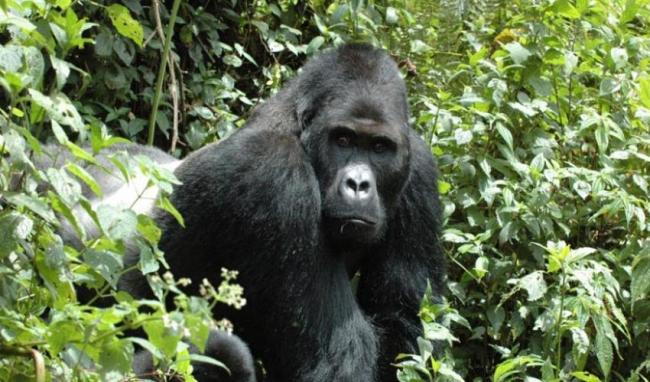
The Eastern Gorilla (Gorilla beringei) – which is made up of two subspecies - has moved from Endangered to Critically Endangered due to a devastating population decline of more than 70 per cent in 20 years. Its population is now estimated to be fewer than 5,000.
Grauer’s Gorilla (G. b. graueri), one subspecies of Eastern Gorilla – has lost 77 per cent of its population since 1994, declining from 16,900 individuals to just 3,800 in 2015.
Killing or capture of great apes is illegal; yet hunting represents the greatest threat to Grauer’s Gorillas.
The second subspecies of Eastern Gorilla – the Mountain Gorilla (G. b. beringei) –is faring better and has increased in number to around 880 individuals.
“To see the Eastern gorilla – one of our closest cousins – slide towards extinction is truly distressing,” says Inger Andersen, IUCN Director General. “We live in a time of tremendous change and each IUCN Red List update makes us realize just how quickly the global extinction crisis is escalating. Conservation action does work and we have increasing evidence of it. It is our responsibility to enhance our efforts to turn the tide and protect the future of our planet.”
The IUCN Red List update also reported the decline of the Plains Zebra (Equus quagga) -- which has been moved from Least Concern to Near Threatened -- due to illegal hunting, and the growing extinction threat to Hawaiian plants posed by invasive species.
Thirty eight of the 415 endemic Hawaiian plant species assessed for this update are listed as Extinct and four other species have been listed as Extinct in the Wild, meaning they only occur in cultivation.
The IUCN Red List now includes 82,954 species of which 23,928 are threatened with extinction.
(Image by Intu Boedhihartono/IUCN World Conservation Congress website)
Support Our Journalism
We cannot do without you.. your contribution supports unbiased journalism
IBNS is not driven by any ism- not wokeism, not racism, not skewed secularism, not hyper right-wing or left liberal ideals, nor by any hardline religious beliefs or hyper nationalism. We want to serve you good old objective news, as they are. We do not judge or preach. We let people decide for themselves. We only try to present factual and well-sourced news.
Support objective journalism for a small contribution.


