


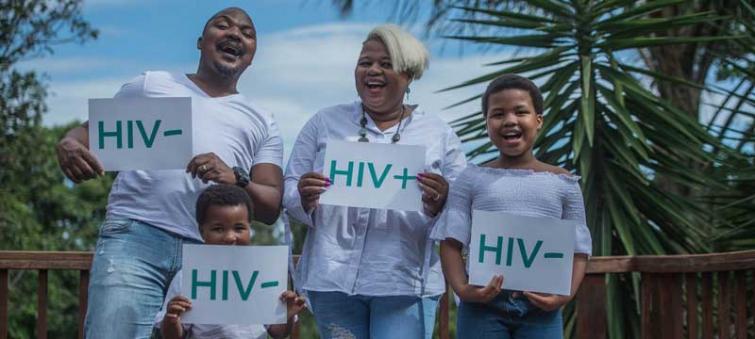
Laws must protect, ‘not reject’ says UNAIDS chief on Zero Discrimination Day
New York, Mar 2 (IBNS): Discriminatory laws and practices that bar access to health and other services must be changed, the United Nations agency leading the fight against HIV/AIDS said on Friday, Zero Discrimination Day.
While the dignity of every person is enshrined in the Universal Declaration of Human Rights, “human rights violations are happening all over the world because of discriminatory laws and practices,” said Michel Sidibé, Executive Director of UNAIDS.
“Laws should protect, not reject. Every person has an equal right to be treated with dignity and respect,” he decalred.
Last year at least 20 countries set travel restrictions against HIV-positive people; some 29 States required a husband or partner’s consent for a woman to access sexual and reproductive health services; 17 countries criminalized transgender people; and same-sex sexual relations were criminalized in at least 67 nations and territories worldwide.
And that is just the tip of the iceberg.
For certain groups, 59 countries instituted mandatory HIV testing for marriage, work or residence permits; 45 States imposed laws requiring parental consent for below-18-year-olds to access HIV testing services; and 33 countries imposed the death penalty for drug offences.
But the news was not all bad. Last year some countries made landmark decisions to change discriminatory laws and bills.
India’s Supreme Court struck down the section of its Penal Code that criminalized same-sex sexual relations; the Philippines lowered the age to 15 for voluntary HIV testing without the need of parental or guardian consent; and Malawi removed provisions from a draft bill that would have criminalized HIV non-disclosure, exposure and transmission.
“All countries must carefully examine their laws and policies in order to ensure equality and protection for all people, without exception,” asserted Mr. Sidibé.
A discriminatory law may be amended or abolished:
Through parliamentary processes and parliamentarian votes, which require awareness-raising among parliamentarians.
Through a petition and request for a national vote or referendum.
Through legal action by affected individual or organizations.
“Zero Discrimination Day is every day,” he said urging worldwide joint action to change discriminatory laws.
UNAIDS has identified a range of laws that are discriminatory, impede access to health and social services, restrict freedom of movement and violate human rights.
Combating discriminatory laws requires raising awareness and mobilizing action.
On Zero Discrimination Day, UNAIDS is proposing specific actions that individuals, civil society organizations, parliamentarians and donor organizations can take to change these laws. They range from being an ally to someone affected by a discriminatory law to joining a non-governmental organization, tabling amendments to laws and calling for legislation reviews.
As part of the Global Partnership for Action to Eliminate all Forms of HIV-Related Stigma and Discrimination, UNAIDS is actively working with United Nations partners, governments and civil society organizations to make the change.
Support Our Journalism
We cannot do without you.. your contribution supports unbiased journalism
IBNS is not driven by any ism- not wokeism, not racism, not skewed secularism, not hyper right-wing or left liberal ideals, nor by any hardline religious beliefs or hyper nationalism. We want to serve you good old objective news, as they are. We do not judge or preach. We let people decide for themselves. We only try to present factual and well-sourced news.
Support objective journalism for a small contribution.


