October 05, 2026 07:52 am (IST)

Follow us:


Midwives can prevent deaths among women and newborns: UN
New York, Jun 4 (IBNS): Midwives are the unsung heroes of maternal and newborn health, according to a new United Nations report released on Tuesday that urges greater investment in these vital healthcare professionals, who can prevent about two-thirds of deaths among women and newborns.
“The State of the World’s Midwifery 2014,” launched by the UN Population Fund (UNFPA), together with the International Confederation of Midwives (ICM) and the World Health Organization (WHO), also calls for more to be done to address the severe shortage of midwifery care across low- and middle-income countries.
The report, launched in Prague at a major conference of midwives, notes visible progress has been made since the inaugural study was released in 2011.
Thirty-three of the 73 countries covered in the report have implemented efforts to improve workforce retention in remote areas, and 20 countries are increasing the recruitment and deployment of midwives. Additionally, 52 of the countries have improved data collection to address health staff shortages and education standards.
But these countries are home to 96 per cent of the global burden of maternal mortality, 91 per cent of stillbirths and 93 per cent of newborn mortality, yet they have only 42 per cent of the world’s physicians, midwives and nurses.
In 2013, an estimated 289,000 women and 2.9 million newborns died – the vast majority due to complications or illnesses that could have been prevented with proper antenatal care or the presence of a skilled midwife during delivery.
The report urges countries to invest in midwifery education and training to contribute to closing the glaring gaps that exist. Investments in midwifery education and training at agreed international standards can yield – as a study from Bangladesh shows – a 1,600 per cent return on investment.
“Midwives make enormous contributions to the health of mothers and newborns and the well-being of entire communities. Access to quality health care is a basic human right. Greater investment in midwifery is key to making this right a reality for women everywhere,” said Dr. Babatunde Osotimehin, UNFPA Executive Director.
When trained and supported by a functional health system, midwives can provide 87 per cent of the essential care needed for women and newborns, and could potentially reduce maternal and newborn deaths by two thirds.
WHO says the new report sets a clear way forward to encourage governments to allocate adequate resources for maternal and newborn health services within national health sector plans.
Midwives have a crucial role to play in the achievement of Millennium Development Goals 4 (decrease child death) and 5 (increase maternal health).
Despite a steady decline in maternal deaths in the 73 countries that are covered in the report – dropping yearly by 3 per cent since 1990 – and newborn deaths – decreasing by 1.9 per cent per year since 1990 – there is more these countries need to do to address the severe shortage of midwifery care.
Today, only 22 per cent of countries have potentially enough midwives to provide life-saving interventions to meet the needs of women and newborns, which leaves over three-fourths (78 per cent) of the countries with severe shortages in proper care. As the population grows, so does the gap in critical resources and infrastructure, unless urgent action is taken.
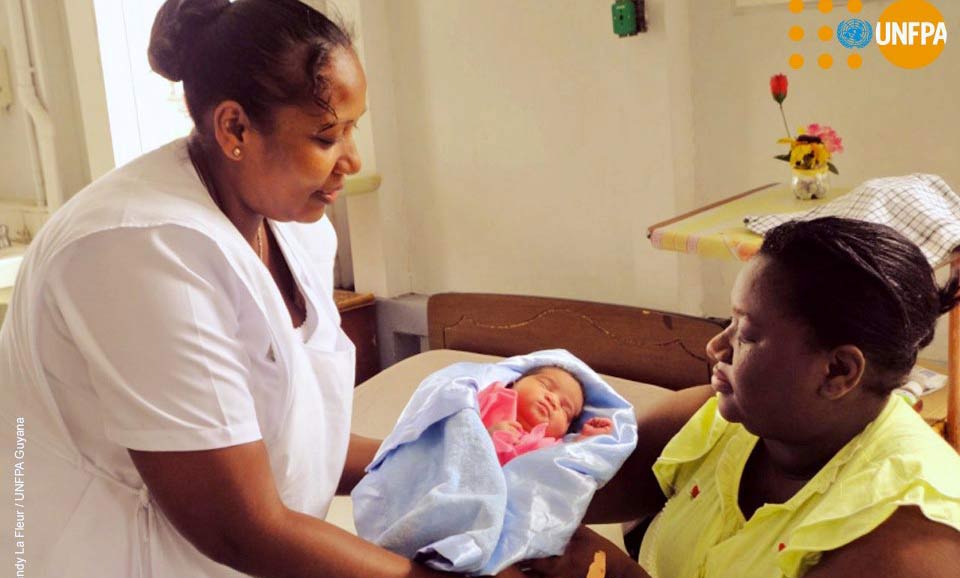
(Investing in Midwives saves lives. Photo: UNFPA)
Support Our Journalism
We cannot do without you.. your contribution supports unbiased journalism
IBNS is not driven by any ism- not wokeism, not racism, not skewed secularism, not hyper right-wing or left liberal ideals, nor by any hardline religious beliefs or hyper nationalism. We want to serve you good old objective news, as they are. We do not judge or preach. We let people decide for themselves. We only try to present factual and well-sourced news.
Support objective journalism for a small contribution.



Latest Headlines
Life expectancy is rising again after COVID-19 shock: WHO reveals global health comeback
Sat, Oct 03 2026
From physiotherapy to AI, robotics: MRCCon 2026 highlights how medical rehabilitation has transformed in 27 years
Fri, Oct 02 2026
Study finds chewing tobacco linked to 2.5 lakh deaths worldwide; India among worst-affected countries
Fri, Oct 02 2026
Kolkata's Desun Hospital's Cardio Care Walkathon daws 200 participants on World Heart Day
Fri, Oct 02 2026
Insomnia is more than just sleepless nights: Study finds higher stroke, dementia risk
Tue, Sep 29 2026
Manipal Hospital Dhakuria hosts ‘Heart of Innovation Cardiac Summit’ ahead of World Heart Day
Mon, Sep 28 2026
Eating with your partner could lower blood sugar spikes, study finds
Sun, Sep 27 2026