


 UNICEF
More access to breastfeeding support could save 820,000 young lives annually, says UNICEF
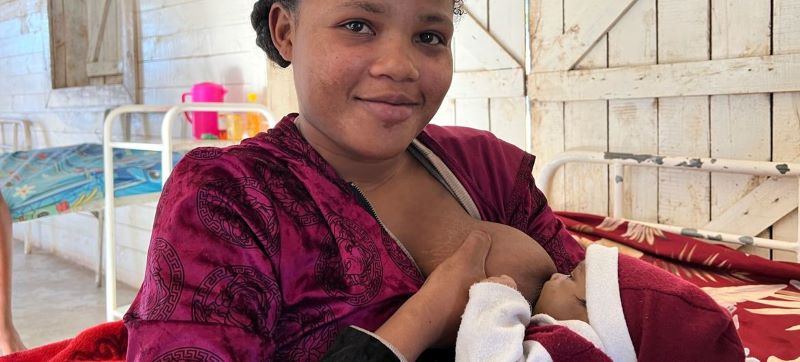
The heads of the UN Children’s Fund (UNICEF) and the World Health Organization (WHO) have called for greater access to breastfeeding support to both reduce health inequity and ensure mothers and babies can survive and thrive.
UNICEF Executive Director Catherine Russell and WHO Director General Tedros Adhanom Ghebreyesus made the appeal in a joint statement to mark the start of World Breastfeeding Week, observed annually from 1-7 August.
“When mothers receive the support they need to breastfeed their babies, everyone benefits. Improving breastfeeding rates could save over 820,000 children’s lives each year, according to the latest available data,” they said.
Breastmilk contains antibodies that protect babies against illness and death. This is especially important during emergencies, when breastfeeding guarantees a safe, nutritious and accessible food source for infants and young children.
Breastfeeding also reduces the burden of childhood illness and the risk of certain types of cancers and noncommunicable diseases for mothers.
Falling short
“In the last 12 years, the number of infants under six months of age globally who are exclusively breastfed has increased by more than 10 per cent. This means 48 per cent of infants worldwide now benefit from this healthy start in life," the agency chiefs said.
Although this represents a significant leap closer to the WHO target of increasing exclusive breastfeeding to at least 50 per cent by 2025, persistent challenges remain which must be addressed.
An estimated 4.5 billion people – more than half the world’s population – do not have full coverage of essential health services, they said.
As a result, many women do not receive the support they need to optimally breastfeed their babies, which includes “trained, empathetic and respectful health advice” as well as counselling.
Reliable data, supportive policies
“Reliable data collection is key to tackling healthcare inequalities and ensuring mothers and families are provided with timely, effective breastfeeding support,” they continued, noting that only half of all countries currently collect data on breastfeeding rates.
Data also needs to be available on policy actions that make breastfeeding possible, they added, such as family-friendly employment policies, regulation of the marketing of breastmilk substitutes and investment in breastfeeding.
The agency chiefs stressed that when breastfeeding is protected and supported, women are more than twice as likely to breastfeed their infants, and “this is a shared responsibility.”
They said families, communities, healthcare workers, policymakers and other decision makers can all play a central role by increasing investment in programmes and policies that protect and support breastfeeding through dedicated national budgets.
Other actions include implementing and monitoring family-friendly workplace policies, such as paid maternity leave, breastfeeding breaks and access to affordable and good-quality childcare.
They also called for ensuring that mothers who are at risk in emergencies or under-represented communities receive breastfeeding protection and support as part of routine health coverage.
Support Our Journalism
We cannot do without you.. your contribution supports unbiased journalism
IBNS is not driven by any ism- not wokeism, not racism, not skewed secularism, not hyper right-wing or left liberal ideals, nor by any hardline religious beliefs or hyper nationalism. We want to serve you good old objective news, as they are. We do not judge or preach. We let people decide for themselves. We only try to present factual and well-sourced news.
Support objective journalism for a small contribution.


