


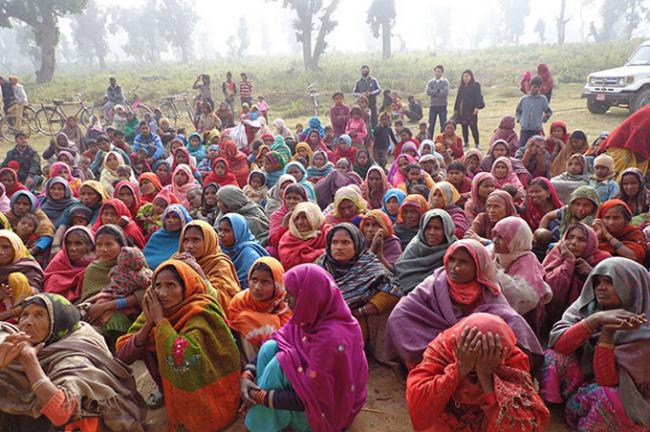
Nepal: UN agency continues distribution of emergency health kits to flood survivors
The UN agency – which has a mandate to focus on improving sexual and reproductive health issues for women around the world – has been active on the ground since mid-August when the Government of Nepal launched an appeal for humanitarian assistance following the massive flooding and landslides which affected some 130,000 people across 23 of the country’s districts.
The agency has since been distributing so-called ‘dignity kits’ containing warm winter clothes, flashlights, soap, and sanitary napkins, as well as reproductive health kits to uprooted families. The reproductive health kits, for their part, are made up of medicines, equipment to support safe deliveries, family planning supplies and supplies to aid in the treatment of rape.
Overall, each kit is designed to provide reproductive health services to between 10,000 and 30,000 women for a three-month period.
In a press release issued last week, Giulia Vallese, UNFPA Representative to Nepal, confirmed that an extra push to distribute flood-response provisions in the four worst-affected districts – Banke, Bardiya, Dang, and Surkhet – had also taken place.
“This support is in accordance with UNFPA Nepal’s commitment to providing reproductive health services, prevent and respond to gender based violence, prevent transmission of HIV and provide much-needed hygiene supplies,” she explained.
UNFPA noted that it would continue to work with the Government and other UN agencies to ensure that the needs of those women and girls still reeling from the disaster continue to be met.
“For many women and their families, the hardships are likely to continue until spring,” the agency said.
Photo: UNFPA Nepal/Hari Karki
Support Our Journalism
We cannot do without you.. your contribution supports unbiased journalism
IBNS is not driven by any ism- not wokeism, not racism, not skewed secularism, not hyper right-wing or left liberal ideals, nor by any hardline religious beliefs or hyper nationalism. We want to serve you good old objective news, as they are. We do not judge or preach. We let people decide for themselves. We only try to present factual and well-sourced news.
Support objective journalism for a small contribution.


