


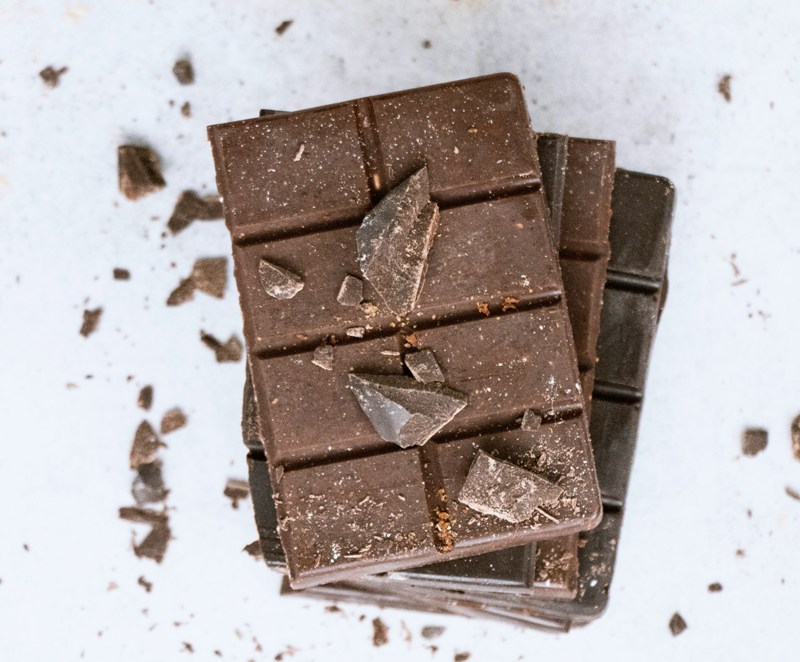
 Chocolate
New study finds chocolate supply across the world threatened by devastating virus
A rapidly spreading virus threatens the health of the cacao tree and the dried seeds from which chocolate is made, jeopardizing the global supply of the world’s most popular treat.
About 50% of the world’s chocolate originates from cacao trees in the West Africa countries of Ivory Coast and Ghana.
The damaging virus is attacking cacao trees in Ghana, resulting in harvest losses of between 15 and 50%.
Spread by small insects called mealybugs that eat the leaves, buds and flowers of trees, the cacao swollen shoot virus disease (CSSVD) is among the most damaging threats to the root ingredient of chocolate.
“This virus is a real threat to the global supply of chocolate,” said Benito Chen-Charpentier, professor of mathematics at The University of Texas at Arlington and an author of “Cacao sustainability: The case of cacao swollen-shoot virus co-infection” in the journal PLoS One. “Pesticides don’t work well against mealybugs, leaving farmers to try to prevent the spread of the disease by cutting out infected trees and breeding resistant trees. But despite these efforts, Ghana has lost more than 254 million cacao trees in recent years.”
Farmers can combat the mealybugs by giving vaccines to the trees to inoculate them from the virus. But the vaccines are expensive, especially for low-wage farmers, and vaccinated trees produce a smaller harvest of cacao, compounding the devastation of the virus.
Chen-Charpentier and colleagues from the University of Kansas, Prairie View A&M, the University of South Florida and the Cocoa Research Institute of Ghana have developed a new strategy: using mathematical data to determine how far apart farmers can plant vaccinated trees to prevent mealybugs from jumping from one tree to another and spreading the virus.
“Mealybugs have several ways of movement, including moving from canopy to canopy, being carried by ants or blown by the wind,” Chen-Charpentier said. “What we needed to do was create a model for cacao growers so they could know how far away they could safely plant vaccinated trees from unvaccinated trees in order to prevent the spread of the virus while keeping costs manageable for these small farmers.”
By experimenting with mathematical patterning techniques, the team created two different types of models that allow farmers to create a protective layer of vaccinated cacao trees around unvaccinated trees.
“While still experimental, these models are exciting because they would help farmers protect their crops while helping them achieve a better harvest,” Chen-Charpentier said. “This is good for the farmers’ bottom line, as well as our global addiction to chocolate.”
Support Our Journalism
We cannot do without you.. your contribution supports unbiased journalism
IBNS is not driven by any ism- not wokeism, not racism, not skewed secularism, not hyper right-wing or left liberal ideals, nor by any hardline religious beliefs or hyper nationalism. We want to serve you good old objective news, as they are. We do not judge or preach. We let people decide for themselves. We only try to present factual and well-sourced news.
Support objective journalism for a small contribution.


