


New TB drug candidates developed from soil bacteria
The research partnership – involving the University of Warwick, and spanning institutions from Australia, Canada and the USA - has discovered a compound which could translate into a new drug lead for TB.
The group looked at soil bacteria compounds, known to effectively prevent other bacteria growing around them. Using synthetic chemistry, the researchers were able to recreate these compounds with structural variations, turning them into more potent chemical analogues.
When tested in a containment laboratory, these analogues proved to be effective killers of Mycobacterium tuberculosis – the bacterium which causes TB.
These chemicals target an enzyme in Mycobacterium tuberculosis called MraY, which catalyses a crucial step in building the cell wall around a bacterium. Attacking this part – a potential ‘Achilles’ heel’ of the bacterium - provided an essential pathway for the antibacterial compounds to attack and destroy TB strains.
Key reagents and expertise in antimicrobial resistance from the research groups of Dr David Roper, Professor Chris Dowson and Professor Tim Bugg at the University of Warwick, played a crucial role in successfully targeting TB bacteria with the new compounds.
Believed by many to be a relic of past centuries, TB still causes more deaths than any other infectious disease, including HIV/AIDs.
In 2015 there were an estimated 10.4 million new cases of TB and 1.4 million deaths from the disease.
Mycobacterium tuberculosis is becoming increasingly resistant to current therapies, meaning there is an urgent need to develop new and effective TB drugs.
In 2015 an estimated 480,000 cases were unresponsive to the two major drugs used to treat TB. It is estimated more than 250,000 TB deaths were from drug-resistant infections.
Dr David Roper, from the University of Warwick’s School of Life Sciences, comments:
“The University of Warwick is a central hub in the UK for antimicrobial resistance research and we have crucial expertise in the bacterial cell wall as a target for new antibiotics.
“This study highlights the international nature of our research and how such collaboration can bring new innovation in drug discovery and biomedicine.”
The research, ‘Sansanmycin Natural Product Analogues as Potent and Selective Anti-Mycobacterials that Inhibit Lipid I Biosynthesis’ is published in Nature Communications today.
The collaboration was led by the University of Sydney, and included the University of Warwick, Monash University, Colorado State University, Simon Fraser University, and the University of Queensland.
The overall research was funded by Australia’s National Health and Medical Research Council (NHMRC) and at Warwick a Research Councils UK AMR Cross Council Initiative Award.
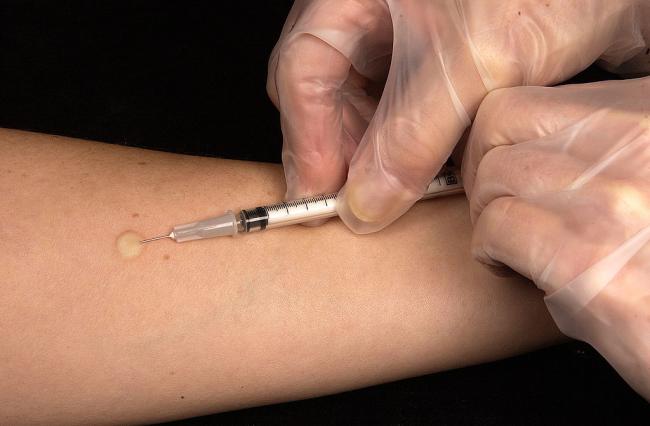
Image:Wikimedia Commons
Support Our Journalism
We cannot do without you.. your contribution supports unbiased journalism
IBNS is not driven by any ism- not wokeism, not racism, not skewed secularism, not hyper right-wing or left liberal ideals, nor by any hardline religious beliefs or hyper nationalism. We want to serve you good old objective news, as they are. We do not judge or preach. We let people decide for themselves. We only try to present factual and well-sourced news.
Support objective journalism for a small contribution.


