


New type of T-cell identified as 'key player' in development of rheumatoid arthritis
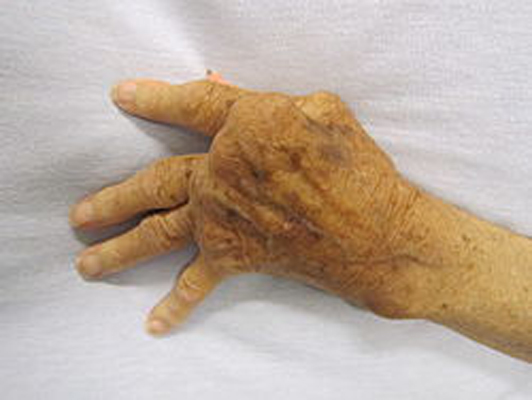
Rheumatoid arthritis (RA) is an autoimmune disease that primarily affects the joints, where the immune system attacks its own tissues and causes chronic inflammation and pain. T-cells are important mediators of the disease, interacting with B-cells to induce plasma cell differentiation and the subsequent production of inflammatory antibodies.
In a study published today in the journal Nature, scientists from the University of Birmingham’s Institute of Inflammation and Ageing, in collaboration with colleagues from the Brigham and Women's Hospital in Boston, USA, have described a new type of T-cell with a unique pattern of behaviour in RA-affected synovial tissues.
These ‘peripheral helper’ T-cells, or Tph cells, are similar to the follicular helper T-cells (Tfh cells) that induce B-cell differentiation within lymph nodes. However, Tph cells are genetically distinct from Tfh cells, and crucially, they are able to migrate to RA-affected joint tissue, where they can interact with B-cells locally.
During the study, researchers used mass cytometry to identify Tph cells in the synovial tissues of RA-affected joints, and global transcriptomics to clearly differentiate these Tph cells from Tfh cells.
The study also shows that Tph cells are able to induce plasma differentiation in vitro, and suggests that their migration into inflamed tissues in vivo is directed by a unique expression of chemokine receptors.
While further work is needed to firmly establish cause and effect, the results of this study show that Tph cells are highly associated with RA, and raise the possibility of a Tph cell association with other autoimmune disorders.
Professor Christopher Buckley, co-author of the study and head of the Rheumatology Research Group at the University of Birmingham, says: ‘For years, genome-wide studies have suggested that T-cells are a key player in RA. Having initially expected to find them in the lymph nodes, we have finally found them hiding in plain sight, within the synovial tissue itself.
‘Our findings imply that Tph cells are uniquely poised to promote B-cell responses and antibody production within pathologically inflamed non-lymphoid tissues, and suggest a promising novel treatment target for autoimmune disease such as RA.’
Image: Wikimedia Commons
Support Our Journalism
We cannot do without you.. your contribution supports unbiased journalism
IBNS is not driven by any ism- not wokeism, not racism, not skewed secularism, not hyper right-wing or left liberal ideals, nor by any hardline religious beliefs or hyper nationalism. We want to serve you good old objective news, as they are. We do not judge or preach. We let people decide for themselves. We only try to present factual and well-sourced news.
Support objective journalism for a small contribution.


