 Water Crisis
New UN report looks underfoot, to solve global water crises
New York: While groundwater accounts for 99 per cent of all running freshwater on Earth, it is often undervalued, mismanaged, and overexploited, according to a report published on Monday by the UN scientific organization, UNESCO.
“Groundwater is a critical natural resource, invisible but indispensable for life on our planet”, UNESCO chief Audrey Azoulay said in the Foreword of Making the invisible visible, the latest edition of the UN World Water Development Report (WWDR).
Noting that nearly 50 per cent of the world’s urban population depends on underground water sources, she pointed out that “more and more aquifers are being polluted, overexploited, and dried up by humans, sometimes with irreversible consequences.”
Water needs protecting
At the opening ceremony of the Ninth World Water Forum in Dakar, Senegal, the authors shone a spotlight on the vast potential of groundwater, the need to manage it sustainably and a call for States to address current and future water crises throughout the globe.
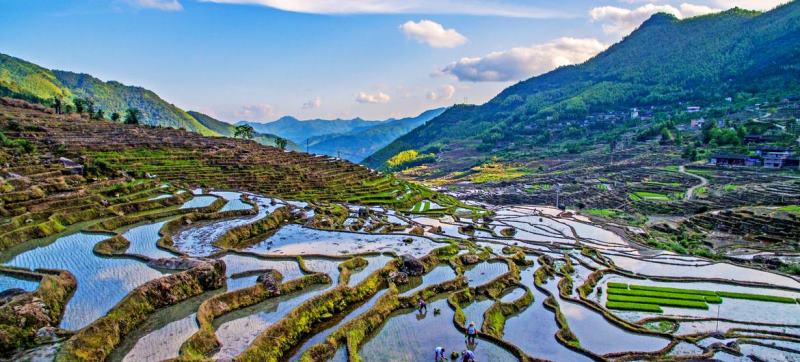
In addition to providing water to drink and for other domestic uses, around 25 per cent is essential for irrigating crops.
Moreover, water use is projected to grow by roughly one per cent annually over the next 30 years, and dependency on groundwater is expected to rise along with the impact of global warming.
Making the case
Tapping more sustainably into groundwater is essential to meet the fundamental needs of an ever-increasing global population and to address the global climate and energy crises, the report contends.
“Improving the way we use and manage groundwater is an urgent priority if we are to achieve the Sustainable Development Goals (SDGs) by 2030,” said Gilbert Houngbo, UN-Water Chair and President of the International Fund for Agricultural Development (IFAD), in the report’s forward.
“Decision-makers must begin to take full account of the vital ways in which groundwater can help ensure the resilience of human life and activities in a future where the climate is becoming increasingly unpredictable.”
Huge benefits
The quality of groundwater makes it safe and affordable, without requiring advanced levels of treatment, according to the report.
Moreover, it is often the most cost-effective way to securely supply water to rural villages and could act as an economic growth catalyst by increasing irrigated areas and improving agricultural yields and crop diversity.
In terms of climate change adaptation, aquifer systems can be utilized to improve year-round freshwater availability, as they evaporative substantially less than surface reservoirs.
Unlocking potential
From collecting data to strengthening environmental regulations and reinforcing human, material and financial resources, the report offers concrete recommendations to unlock the enormous potential of groundwater.
Acquiring data and information – usually the responsibility of national and local groundwater agencies – could be complemented by the private sector, the authors argue.
And as a matter of corporate social responsibility, private companies are highly encouraged to share these data and information with public sector professionals.
Strengthen regulations
Because it is practically irreversible, groundwater pollution must be avoided – and its invisible nature makes prosecuting polluters quite challenging.
Preventing contamination requires suitable land use and appropriate environmental regulations, especially across aquifer recharge areas, WWDR stresses, pushing governments, as resource custodians, to ensure that access to and profit from groundwater are distributed equitably.
“Improved knowledge and capacity development is not enough. To protect aquifers, we also need innovation, in terms of technical interventions, institutional and legal reforms, improved financing, and behavioural changes,” argued the UNESCO chief.
Groundwater is the focus of World Water Day, marked on Wednesday, and in cooperation with UN-Water, UNESCO is organizing a global groundwater summit in December.
UN-Water’s flagship WWDR focuses on a different theme every year and is published by UNESCO on behalf of UN-Water.
Its production is coordinated by the UNESCO World Water Assessment Programme to provide insight into the main trends concerning the state, use and management of freshwater and sanitation.
Support Our Journalism
We cannot do without you.. your contribution supports unbiased journalism
IBNS is not driven by any ism- not wokeism, not racism, not skewed secularism, not hyper right-wing or left liberal ideals, nor by any hardline religious beliefs or hyper nationalism. We want to serve you good old objective news, as they are. We do not judge or preach. We let people decide for themselves. We only try to present factual and well-sourced news.
Support objective journalism for a small contribution.