Oral drug treatment helps protect cancer patients from potentially deadly DVT and pulmonary embolism: Study
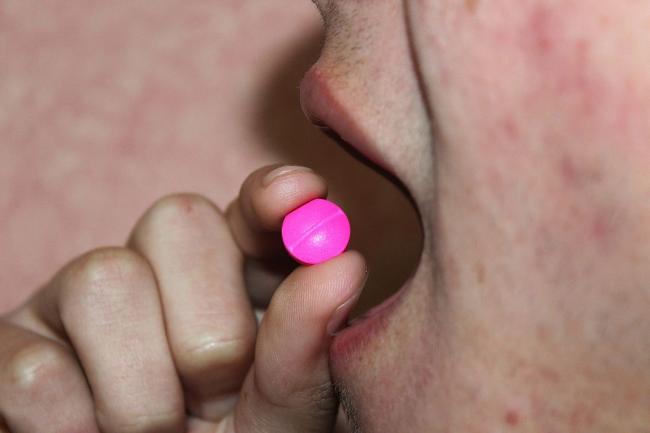
London, May 13 (IBNS): Research from the University of Warwick indicates that taking a tablet a day can help treat cancer patients of a potentially deadly condition.
People with cancer have an increased risk of developing blood clots, with roughly one in five experiencing venous thromboembolism (VTE) - either deep vein thrombosis (DVT) or pulmonary embolism (PE). Blood clots in the deep veins of the leg may travel to the lungs causing a pulmonary embolism. These two conditions are referred to as VTE - a dangerous and potentially deadly medical condition of which there are 10 million cases worldwide.
Current international guidelines recommend cancer patients are injected with an anticoagulant (a low molecular weight heparin) to treat and prevent recurrence of VTE. However, new results from a large pilot trial run at the University’s Warwick Medical School called ‘select-d’ suggest that a daily tablet could be a beneficial alternative for treating VTE in selected patients.
Research led by Professor Annie Young of Warwick Medical School found that prescribing the oral drug rivaroxaban (Xarelto) significantly reduced venous thromboembolism recurrence among patients with cancer and VTE. She said: “Clinicians were already adopting the oral drug into practice for non-cancer patients and now they have data from this study to indicate that this form of treatment is an alternative option for many cancer patients who have a clot.”
Although there are many causes and risk factors for VTE, cancer patients are particularly at risk due to a combination of factors such as immobility (if in bed poorly), pancreatic and gastric tumours, and chemotherapy. Because VTE can be life-threatening, blood thinners are used to shrink existing clots and prevent others from forming. The ‘select-d’ trial enrolled 406 patients who had cancer and VTE; most (69 percent) were receiving cancer treatment (typically chemotherapy) at the time of their VTE.
Half were randomly assigned to receive low-molecular-weight heparin (dalteparin) and half were given the oral drug rivaroxaban. After six months of treatment, the VTE recurrence rate was four percent among those taking the tablet and 11 percent in those receiving dalteparin.
The results for secondary outcomes were mixed. In patients receiving rivaroxaban, there were around the same percentage of major bleeding events (6%) as those receiving dalteparin (4%) but a marked and significant increase in clinically relevant non-major bleeds (13%) with rivaroxaban compared to those having low molecular weight heparin (4%). The reason for increased bleeding is not known, it may be because rivaroxaban is more ‘potent’.
Professor Young added: “We now need to be sitting down with each one of our cancer patients with VTE, discussing their preference alongside looking at all their clinical details including whether the cancer lesion is still there, what other medications are being taken and what other conditions the patient has so that we can choose the optimal VTE treatment for each patient.”
Image: WIkimedia Commons
Support Our Journalism
We cannot do without you.. your contribution supports unbiased journalism
IBNS is not driven by any ism- not wokeism, not racism, not skewed secularism, not hyper right-wing or left liberal ideals, nor by any hardline religious beliefs or hyper nationalism. We want to serve you good old objective news, as they are. We do not judge or preach. We let people decide for themselves. We only try to present factual and well-sourced news.
Support objective journalism for a small contribution.