


 COVID19
Over one million lives were saved in Europe due to COVID-19 vaccines, says WHO
COVID-19 vaccines saved at least 1.4 million lives in Europe – “irrefutable” proof of the power of these inoculations, the regional head of the World Health Organization (WHO) said on Tuesday.
Delivering his first message of the new year, Dr. Hans Kluge stressed that without vaccines, the death toll on the continent “could have been around four million, possibly even higher.”
More than 2.5 million COVID-19 deaths, and 277 million confirmed cases, were reported in the vast WHO European Region, which comprises 53 countries stretching from the Atlantic to the Pacific Ocean.
A ‘vital decision’
Analysis of 34 countries showed that most people whose lives were saved by vaccines, 90 per cent, were over 60.
The vaccines reduced deaths by 57 per cent in the period between their rollout in December 2020 through March 2023, with the first booster doses alone saving an estimated 700,000 lives.
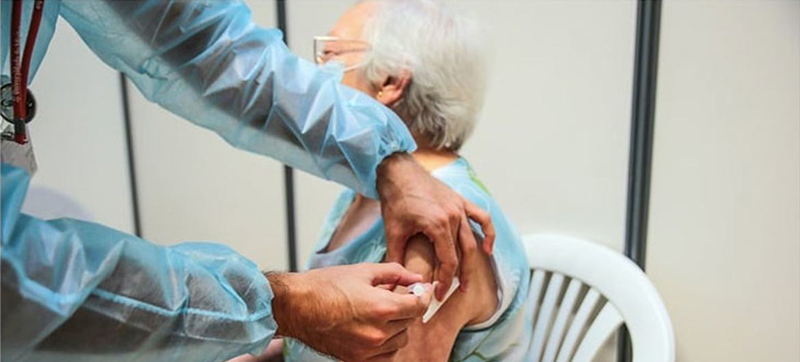
“Today, there are 1.4 million people in our region – most of them elderly – who are around to enjoy life with their loved ones because they took the vital decision to be vaccinated against COVID-19,” said Dr. Kluge, speaking from Copenhagen.
“This is the power of vaccines. The evidence is irrefutable,” he added.
Vaccination must continue
COVID-19 rates in Europe remain elevated but are decreasing. WHO recommends that people at highest risk of the disease should continue to be re-vaccinated six to 12 months after their most recent dose.
This category includes older persons, frontline health workers, pregnant women, and people who are immunocompromised or have significant chronic medical conditions.
Meanwhile, WHO is currently seeing widespread circulation of respiratory viruses like influenza, Respiratory Syncytial Virus (RSV) and measles in the European region.
Flu rates rising
RSV rates peaked before the new year and are now declining, Dr. Kluge reported, and influenza rates are rapidly rising, with a likely surge expected over the coming weeks.
There has been a nearly 60 per cent increase in reported hospitalizations for the flu over the past two weeks and a 21 per cent increase in ICU admissions, compared to the previous two weeks.
Flu cases increased four-fold between November and December, with 38 countries reporting the start of the seasonal influenza epidemic. Those most affected by severe disease are people aged 65 and older and the very young.
“We are concerned about reports of localised pressures on hospitals and overcrowding in emergency rooms, due to a confluence of circulating respiratory viruses,” he said.
Variants and vigilance
Dr. Kluge stressed that although COVID-19 infections rates are broadly decreasing across Europe, the situation can rapidly change in the face of the new variant of interest, JN.1, now the most common variant reported globally.
“Though there’s no current evidence to suggest the JN.1 variant is more severe, the unpredictable nature of this virus shows how vital it is that countries continue to monitor for any new variants,” he said.
As many countries have reduced or stopped reporting COVID-19 data to WHO, Dr. Kluge underscored the need for continued surveillance as the disease “is here to stay”.
“We know how to keep ourselves and others safe, whether from COVID-19 or other respiratory infections,” he said, referring to measures such as staying home if sick and wearing masks in settings such as hospitals or crowded places.
Noting that “health is slipping from the political agenda”, Dr. Kluge voiced deep concern over the failure to address the “ticking time-bomb facing our health and care workforce”.
“As health systems come under strain, we are reminded that we may be unprepared for anything out-of-the-ordinary, such as the emergence of a new, more severe COVID-19 variant or a yet unknown pathogen,” he warned, urging leaders to show “demonstrable support” for health workers.
Support Our Journalism
We cannot do without you.. your contribution supports unbiased journalism
IBNS is not driven by any ism- not wokeism, not racism, not skewed secularism, not hyper right-wing or left liberal ideals, nor by any hardline religious beliefs or hyper nationalism. We want to serve you good old objective news, as they are. We do not judge or preach. We let people decide for themselves. We only try to present factual and well-sourced news.
Support objective journalism for a small contribution.


