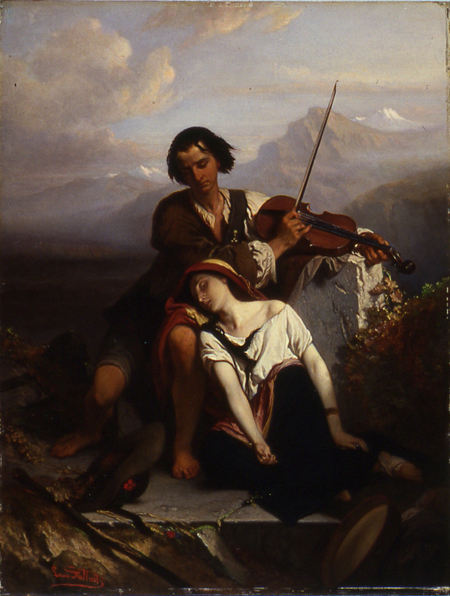
Research shows music therapy reduces depression in children and adolescents
In partnership with Every Day Harmony (the brand name for Northern Ireland Music Therapy Trust), the researchers found that children and young people, aged 8-16-years-old, who received music therapy had significantly improved self-esteem and reduced depression compared with those who received treatment without music therapy, read the Bournemouth University website.
The study, which was funded by the Big Lottery Fund, also found that young people aged 13 and over who received music therapy had improved communicative and interactive skills, compared to those who received usual care options alone.
Music therapy also improved social functioning over time in all age groups, read the website.
In the largest ever study of its kind, 251 children and young people were involved in the study, which took place between March 2011 and May 2014.
They were divided into two groups: 128 underwent the usual care options, while 123 were assigned to music therapy in addition to usual care.
All were being treated for emotional, developmental or behavioural problems.
Professor Sam Porter of the Department of Social Sciences and Social Work at Bournemouth University, who led the study, said: “This study is hugely significant in terms of determining effective treatments for children and young people with behavioural problems and mental health needs. The findings contained in our report should be considered by healthcare providers and commissioners when making decisions about the sort of care for young people that they wish to support.”
Dr Valerie Holmes, Centre for Public Health, School of Medicine, Dentistry and Biomedical Sciences, Queen’s University Belfast and co-researcher, added: “This is the largest study ever to be carried out looking at music therapy’s ability to help this very vulnerable group.”
Ciara Reilly, Chief Executive of Every Day Harmony, the music therapy charity that was a partner in the research, said: “Music therapy has often been used with children and young people with particular mental health needs, but this is the first time its effectiveness has been shown by a definitive randomised controlled trail in a clinical setting. The findings are dramatic and underscore the need for music therapy to be made available as a mainstream treatment option. For a long time, we have relied on anecdotal evidence and small-scale research findings about how well music therapy works. Now we have robust clinical evidence to show its beneficial effects. I would like to record my gratefulness to the Big Lottery Fund for its vision in providing the resources for this research to be carried out”.
The research team will now look at the data to establish how cost effective music therapy is in relation to other treatments, the website said on its website.
Image: Wikipedia Commons
Support Our Journalism
We cannot do without you.. your contribution supports unbiased journalism
IBNS is not driven by any ism- not wokeism, not racism, not skewed secularism, not hyper right-wing or left liberal ideals, nor by any hardline religious beliefs or hyper nationalism. We want to serve you good old objective news, as they are. We do not judge or preach. We let people decide for themselves. We only try to present factual and well-sourced news.
Support objective journalism for a small contribution.