


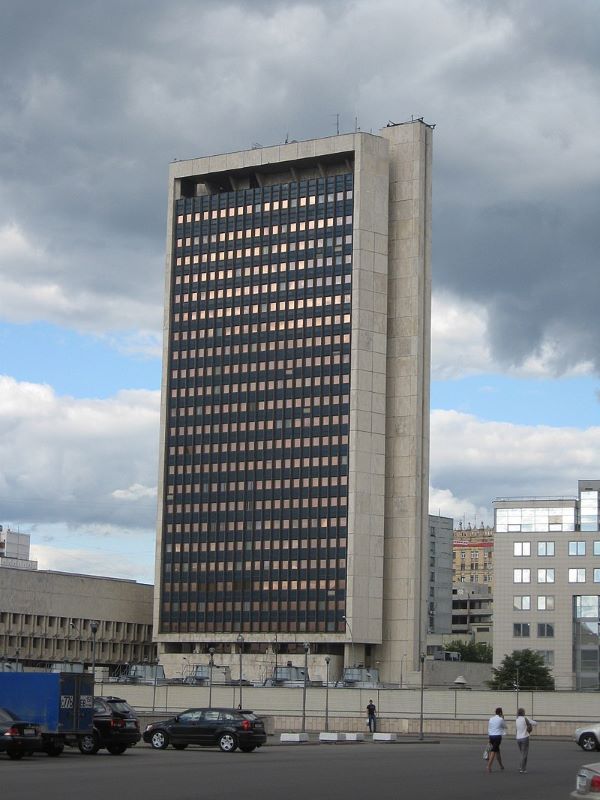
 Russian Space Agency
Russian space agency halts launch of Sfera satellite constellation for one year
Moscow/Sputnik: The launch of satellites within the Sfera constellation will begin in 2024 rather than in 2023, as previously intended, Sergey Prokhorov, the head of the Department of Advanced Programs at the Russian state space agency, Roscosmos, and the director of the Sfera program, said on Wednesday.
"If funding for priority work starts next year, then, I hope, the first launches will begin in 2024, which will allow us to deploy the high-orbit segment. Next, we will begin to unfold the low-orbit segment. In parallel, we will be working to create radar monitoring systems based on small spacecraft," Prokhorov told Roscosmos' Russky Kosmos journal.
Program Sfera was inaugurated by Russian President Vladimir Putin in 2018. It emerged as a Russian challenger to the previously existing OneWeb and Starlink constellations of satellites, developed in the United Kingdom and the United States, respectively.
Support Our Journalism
We cannot do without you.. your contribution supports unbiased journalism
IBNS is not driven by any ism- not wokeism, not racism, not skewed secularism, not hyper right-wing or left liberal ideals, nor by any hardline religious beliefs or hyper nationalism. We want to serve you good old objective news, as they are. We do not judge or preach. We let people decide for themselves. We only try to present factual and well-sourced news.
Support objective journalism for a small contribution.


