


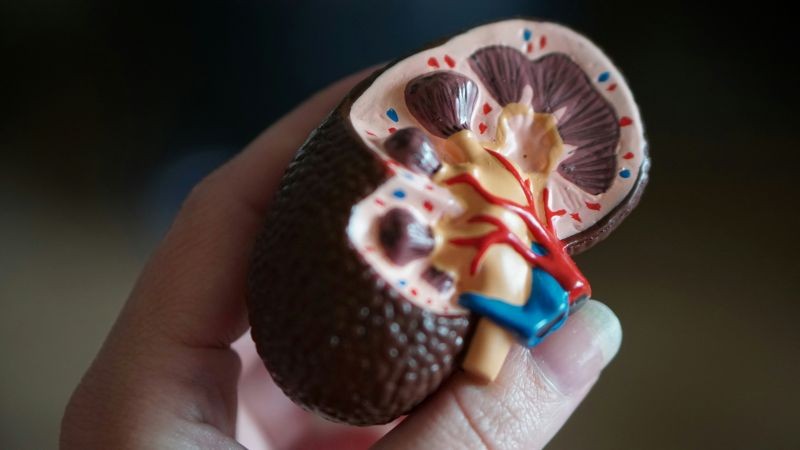
 Kidney
Scientists reveal new ways to predict course of chronic kidney disease
Scientists from The University of Manchester and Northern Care Alliance NHS Foundation Trust have discovered a series of biological signals which can predict how chronic kidney disease is likely to progress.
Published in the American Journal of Nephrology, the researchers show that higher levels of Kidney Injury Molecule-1(KIM-1), a special marker of kidney damage in the blood and urine, are associated with higher risks of mortality and kidney failure, never before have the two been measured together.
The research follows hot on the heels of their paper published in the Journal of the American Society of Nephrology last month, which measured 21 markers in blood and urine that reflect key processes driving kidney disease, inflammation, and heart disease.
From the JASN study , the team pinpointed three standout markers that can predict both how quickly kidney disease will progress and the risk of death.
Unlike the generic tests used in routine kidney clinics, the markers shine a light on the biological changes, underpinning CKD, that truly drive the disease. By revealing the hidden drivers, the discovery opens the door to new treatments designed to target the disease at its roots.
Lead author Dr Thomas McDonnell, is both a researcher at The University of Manchester and a kidney doctor at Salford Royal Hospital, part of Northern Care Alliance NHS Foundation Trust.
He said: “The progression of chronic kidney disease is highly variable between people, so it’s difficult to predict which patients will progress to kidney failure or worse.
“But our work raises the prospect of the development of simple blood or urine tests that could better predict the degree of risk- invaluable information for doctors and patients.
“We think that , these models, which are more closely aligned with the underlying biological changes happening in chronic kidney disease, could allow a more tailored approach to the individual needs of patients.”
The researchers analysed the blood and urine of adults with non-dialysis chronic kidney disease from 16 nephrology centres across the UK.
They analysed blood and urine KIM-1 in 2581 patients for the KIM-1 study and looked at all 21 markers of kidney damage, fibrosis, inflammation, and cardiovascular disease together in 2,884 patients for the second
They used statistical analysis to assess how or if biological signals associated with kidney failure and mortality, and developed risk prediction models.
Because chronic kidney disease can stay stable for years in one person but suddenly worsen in another, doctors find it difficult to identify which patients are most at risk.
Existing blood tests currently only give doctors a partial picture, missing important clues like inflammation and scar build up. As a result, people with the same CKD stage are often labelled has having the same risk and are given the same treatments, according to University of Manchester website.
Dr McDonnell added: “This discovery may will help doctors identify high-risk patients, so they enact more aggressive interventions, earlier specialist referral, and earlier treatment therapies.
“And by identifying low risk patients, they would be able to prevent over-treatment.
“Living with chronic kidney disease often means managing fatigue, having limits to what you can and can’t eat, and being consigned to frequent medical appointments.
“It can be physically and emotionally challenging, but with the appropriate care, it is possible maintain an active and fulfilling life.”
Support Our Journalism
We cannot do without you.. your contribution supports unbiased journalism
IBNS is not driven by any ism- not wokeism, not racism, not skewed secularism, not hyper right-wing or left liberal ideals, nor by any hardline religious beliefs or hyper nationalism. We want to serve you good old objective news, as they are. We do not judge or preach. We let people decide for themselves. We only try to present factual and well-sourced news.
Support objective journalism for a small contribution.


